
The Coxon Fund, by Henry James
Author: Doctor Kits Source: Craft Kits Views: 【L M S】 Published:2026-07-29 17:56:08 Comments:
Transcribed from the 1915 Martin Secker edition by DavidPrice,best magnetic building sticks for 8 year olds under 30 dollars email [email protected]
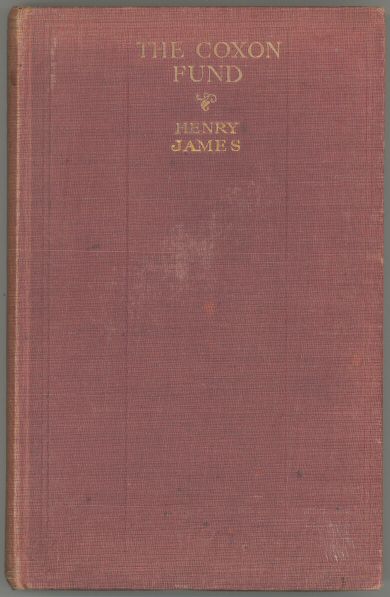
THE
COXON FUND
BY HENRY JAMES

LONDON: MARTIN SECKER
NUMBER FIVE JOHN STREET ADELPHI
This editionfirst published 1915
The textfollows that of the
Definitive Edition
p. 1I
“They’ve got him forlife!” I said to myself that evening on my way back to thestation; but later on, alone in the compartment (from Wimbledonto Waterloo, before the glory of the District Railway) I amendedthis declaration in the light of the sense that my friends wouldprobably after all not enjoy a monopoly of Mr. Saltram. Iwon’t pretend to have taken his vast measure on that firstoccasion, but I think I had achieved a glimpse of what theprivilege of his acquaintance might mean for many persons in theway of charges accepted. He had been a great experience,and it was this perhaps that had put me into the frame offoreseeing how we should all, sooner or later, have the honour ofdealing with him as a whole. Whatever impression I thenreceived of the amount of this total, I had a full enough visionof the patience of the Mulvilles. He was to stay all thewinter: Adelaide dropped it in a tone that drew the sting fromthe inevitable emphasis. These excellent people mightindeed have been content to give the circle of hospitality adiameter of six months; but if they didn’t say he was tostay all summer as well it was only because this was more thanthey ventured to hope. I remember that at dinner thatevening he wore slippers, new and predominantly purple, of somequeer carpet-stuff; but the Mulvilles were still in the stage ofsupposing that he might be snatched from them by higherbidders. At a later time they grew, poor dears, to fear nosnatching; but theirs was a fidelity which needed no help fromcompetition to make them proud. Wonderful indeed as, whenall was said, you inevitably pronounced Frank Saltram, it was notto be overlooked that the Kent Mulvilles were in their way stillmore extraordinary: as striking an instance as could easily beencountered of the familiar truth that remarkable men findremarkable conveniences.
They had sent for me from Wimbledon to come out and dine, andthere had been an implication in Adelaide’snote—judged by her notes alone she might have been thoughtsilly—that it was a case in which something momentous wasto be determined or done. I had never known them not be ina “state” about somebody, and I dare say I tried tobe droll on this point in accepting their invitation. Onfinding myself in the presence of their latest discovery I hadnot at first felt irreverence droop—and, thank heaven, Ihave never been absolutely deprived of that alternative in Mr.Saltram’s company. I saw, however—I hasten todeclare it—that compared to this specimen their otherphoenixes had been birds of inconsiderable feather, and Iafterwards took credit to myself for not having even in primalbewilderments made a mistake about the essence of the man. He had an incomparable gift; I never was blind to it—itdazzles me still. It dazzles me perhaps even more inremembrance than in fact, for I’m not unaware that for sorare a subject the imagination goes to some expense, inserting ajewel here and there or giving a twist to a plume. How theart of portraiture would rejoice in this figure if the art ofportraiture had only the canvas! Nature, in truth, hadlargely rounded it, and if memory, hovering about it, sometimesholds her breath, this is because the voice that comes back wasreally golden.
Though the great man was an inmate and didn’t dress, hekept dinner on this occasion waiting, and the first words heuttered on coming into the room were an elated announcement toMulville that he had found out something. Not catching theallusion and gaping doubtless a little at his face, I privatelyasked Adelaide what he had found out. I shall never forgetthe look she gave me as she replied:“Everything!” She really believed it. Atthat moment, at any rate, he had found out that the mercy of theMulvilles was infinite. He had previously of coursediscovered, as I had myself for that matter, that their dinnerswere soignés. Let me not indeed, in saying this,neglect to declare that I shall falsify my counterfeit if I seemto hint that there was in his nature any ounce ofcalculation. He took whatever came, but he never plottedfor it, and no man who was so much of an absorbent can ever havebeen so little of a parasite. He had a system of theuniverse, but he had no system of sponging—that was quitehand-to-mouth. He had fine gross easy senses, but it wasnot his good-natured appetite that wrought confusion. If hehad loved us for our dinners we could have paid with our dinners,and it would have been a great economy of finer matter. Imake free in these connexions with the plural possessive becauseif I was never able to do what the Mulvilles did, and people withstill bigger houses and simpler charities, I met, first and last,every demand of reflexion, of emotion—particularly perhapsthose of gratitude and of resentment. No one, I think, paidthe tribute of giving him up so often, and if it’srendering honour to borrow wisdom I’ve a right to talk ofmy sacrifices. He yielded lessons as the sea yieldsfish—I lived for a while on this diet. Sometimes italmost appeared to me that his massive monstrous failure—iffailure after all it was—had been designed for my privaterecreation. He fairly pampered my curiosity; but thehistory of that experience would take me too far. This isnot the large canvas I just now spoke of, and I wouldn’thave approached him with my present hand had it been a questionof all the features. Frank Saltram’s features, forartistic purposes, are verily the anecdotes that are to begathered. Their name is legion, and this is only one, ofwhich the interest is that it concerns even more closely severalother persons. Such episodes, as one looks back, are thelittle dramas that made up the innumerable facets of the bigdrama—which is yet to be reported.
p.10II
It is furthermore remarkable thatthough the two stories are distinct—my own, as it were, andthis other—they equally began, in a manner, the first nightof my acquaintance with Frank Saltram, the night I came back fromWimbledon so agitated with a new sense of life that, in London,for the very thrill of it, I could only walk home. Walkingand swinging my stick, I overtook, at Buckingham Gate, GeorgeGravener, and George Gravener’s story may be said to havebegun with my making him, as our paths lay together, come homewith me for a talk. I duly remember, let me parenthesise,that it was still more that of another person, and also thatseveral years were to elapse before it was to extend to a secondchapter. I had much to say to him, none the less, about myvisit to the Mulvilles, whom he more indifferently knew, and Iwas at any rate so amusing that for long afterwards he neverencountered me without asking for news of the old man of thesea. I hadn’t said Mr. Saltram was old, and it was tobe seen that he was of an age to outweather GeorgeGravener. I had at that time a lodging in Ebury Street, andGravener was staying at his brother’s empty house in EatonSquare. At Cambridge, five years before, even in ourdevastating set, his intellectual power had seemed to me almostawful. Some one had once asked me privately, with blanchedcheeks, what it was then that after all such a mind as that leftstanding. “It leaves itself!” I could recollectdevoutly replying. I could smile at present for thisremembrance, since before we got to Ebury Street I was struckwith the fact that, save in the sense of being well set up on hislegs, George Gravener had actually ceased to tower. Theuniverse he laid low had somehow bloomed again—the usualeminences were visible. I wondered whether he had lost hishumour, or only, dreadful thought, had never had any—noteven when I had fancied him most Aristophanesque. What wasthe need of appealing to laughter, however, I could enviouslyenquire, where you might appeal so confidently tomeasurement? Mr. Saltram’s queer figure, his thicknose and hanging lip, were fresh to me: in the light of my oldfriend’s fine cold symmetry they presented mere success inamusing as the refuge of conscious ugliness. Already, athungry twenty-six, Gravener looked as blank and parliamentary asif he were fifty and popular. In my scrap of aresidence—he had a worldling’s eye for its futileconveniences, but never a comrade’s joke—I soundedFrank Saltram in his ears; a circumstance I mention in order tonote that even then I was surprised at his impatience of myenlivenment. As he had never before heard of the personageit took indeed the form of impatience of the preposterousMulvilles, his relation to whom, like mine, had had its origin inan early, a childish intimacy with the young Adelaide, the fruitof multiplied ties in the previous generation. When shemarried Kent Mulville, who was older than Gravener and I and muchmore amiable, I gained a friend, but Gravener practically lostone. We reacted in different ways from the form taken bywhat he called their deplorable social action—the form (theterm was also his) of nasty second-rate gush. I may haveheld in my ‘for intérieur’ that the goodpeople at Wimbledon were beautiful fools, but when he sniffed atthem I couldn’t help taking the opposite line, for Ialready felt that even should we happen to agree it would alwaysbe for reasons that differed. It came home to me that hewas admirably British as, without so much as a sociable sneer atmy bookbinder, he turned away from the serried rows of my littleFrench library.
“Of course I’ve never seen the fellow, butit’s clear enough he’s a humbug.”
“Clear ‘enough’ is just what itisn’t,” I replied; “if it onlywere!” That ejaculation on my part must have been thebeginning of what was to be later a long ache for final frivolousrest. Gravener was profound enough to remark after a momentthat in the first place he couldn’t be anything but aDissenter, and when I answered that the very note of hisfascination was his extraordinary speculative breadth my friendretorted that there was no cad like your cultivated cad, and thatI might depend upon discovering—since I had had the levitynot already to have enquired—that my shining lightproceeded, a generation back, from a Methodistcheesemonger. I confess I was struck with his insistence,and I said, after reflexion: “It may be—I admit itmay be; but why on earth are you so sure?”—asking thequestion mainly to lay him the trap of saying that it was becausethe poor man didn’t dress for dinner. He took aninstant to circumvent my trap and come blandly out the otherside.
“Because the Kent Mulvilles have invented him. They’ve an infallible hand for frauds. All theirgeese are swans. They were born to be duped, they like it,they cry for it, they don’t know anything from anything,and they disgust one—luckily perhaps!—with Christiancharity.” His vehemence was doubtless an accident,but it might have been a strange foreknowledge. I forgetwhat protest I dropped; it was at any rate something that led himto go on after a moment: “I only ask onething—it’s perfectly simple. Is a man, in agiven case, a real gentleman?”
“A real gentleman, my dear fellow—that’s sosoon said!”
“Not so soon when he isn’t! If they’vegot hold of one this time he must be a great rascal!”
“I might feel injured,” I answered, “if Ididn’t reflect that they don’t rave aboutme.”
“Don’t be too sure! I’ll grant thathe’s a gentleman,” Gravener presently added,“if you’ll admit that he’s a scamp.”
“I don’t know which to admire most, your logic oryour benevolence.”
My friend coloured at this, but he didn’t change thesubject. “Where did they pick him up?”
“I think they were struck with something he hadpublished.”
“I can fancy the dreary thing!”
“I believe they found out he had all sorts of worriesand difficulties.”
“That of course wasn’t to be endured, so theyjumped at the privilege of paying his debts!” Iprofessed that I knew nothing about his debts, and I reminded myvisitor that though the dear Mulvilles were angels they wereneither idiots nor millionaires. What they mainly aimed atwas reuniting Mr. Saltram to his wife. “I wasexpecting to hear he has basely abandoned her,” Gravenerwent on, at this, “and I’m too glad you don’tdisappoint me.”
I tried to recall exactly what Mrs. Mulville had toldme. “He didn’t leave her—no. It’s she who has left him.”
“Left him to us?” Gravener asked. “Themonster—many thanks! I decline to takehim.”
“You’ll hear more about him in spite ofyourself. I can’t, no, I really can’t resistthe impression that he’s a big man.” I wasalready mastering—to my shame perhaps be it said—justthe tone my old friend least liked.
“It’s doubtless only a trifle,” he returned,“but you haven’t happened to mention what hisreputation’s to rest on.”
“Why on what I began by boring you with—hisextraordinary mind.”
“As exhibited in his writings?”
“Possibly in his writings, but certainly in his talk,which is far and away the richest I ever listened to.”
“And what’s it all about?”
“My dear fellow, don’t ask me! Abouteverything!” I pursued, reminding myself of poorAdelaide. “About his ideas of things,” I thenmore charitably added. “You must have heard him toknow what I mean—it’s unlike anything that ever washeard.” I coloured, I admit, I overcharged a little,for such a picture was an anticipation of Saltram’s laterdevelopment and still more of my fuller acquaintance withhim. However, I really expressed, a little lyricallyperhaps, my actual imagination of him when I proceeded to declarethat, in a cloud of tradition, of legend, he might very well godown to posterity as the greatest of all great talkers. Before we parted George Gravener had wondered why such a rowshould be made about a chatterbox the more and why he should bepampered and pensioned. The greater the wind-bag thegreater the calamity. Out of proportion to everything elseon earth had come to be this wagging of the tongue. We weredrenched with talk—our wretched age was dying of it. I differed from him here sincerely, only going so far as toconcede, and gladly, that we were drenched with sound. Itwas not however the mere speakers who were killing us—itwas the mere stammerers. Fine talk was as rare as it wasrefreshing—the gift of the gods themselves, the one starryspangle on the ragged cloak of humanity. How many men werethere who rose to this privilege, of how many masters ofconversation could he boast the acquaintance? Dying oftalk?—why we were dying of the lack of it! Badwriting wasn’t talk, as many people seemed to think, andeven good wasn’t always to be compared to it. Fromthe best talk indeed the best writing had something tolearn. I fancifully added that we too should peradventurebe gilded by the legend, should be pointed at for havinglistened, for having actually heard. Gravener, who hadglanced at his watch and discovered it was midnight, found to allthis a retort beautifully characteristic of him.
“There’s one little fact to be borne in mind inthe presence equally of the best talk and of theworst.” He looked, in saying this, as if he meantgreat things, and I was sure he could only mean once more thatneither of them mattered if a man wasn’t a realgentleman. Perhaps it was what he did mean; he deprived mehowever of the exultation of being right by putting the truth ina slightly different way. “The only thing that reallycounts for one’s estimate of a person is hisconduct.” He had his watch still in his palm, and Ireproached him with unfair play in having ascertained beforehandthat it was now the hour at which I always gave in. Mypleasantry so far failed to mollify him that he promptly addedthat to the rule he had just enunciated there was absolutely noexception.
“None whatever?”
“None whatever.”
“Trust me then to try to be good at any price!” Ilaughed as I went with him to the door. “I declare Iwill be, if I have to be horrible!”
p.19III
If that first night was one of theliveliest, or at any rate was the freshest, of my exaltations,there was another, four years later, that was one of my greatdiscomposures. Repetition, I well knew by this time, wasthe secret of Saltram’s power to alienate, and of courseone would never have seen him at his finest if one hadn’tseen him in his remorses. They set in mainly at this seasonand were magnificent, elemental, orchestral. I was quiteaware that one of these atmospheric disturbances was now due; butnone the less, in our arduous attempt to set him on his feet as alecturer, it was impossible not to feel that two failures were alarge order, as we said, for a short course of five. Thiswas the second time, and it was past nine o’clock; theaudience, a muster unprecedented and really encouraging, hadfortunately the attitude of blandness that might have been lookedfor in persons whom the promise of (if I’m not mistaken) AnAnalysis of Primary Ideas had drawn to the neighbourhood of UpperBaker Street. There was in those days in that region apetty lecture-hall to be secured on terms as moderate as thefunds left at our disposal by the irrepressible question of themaintenance of five small Saltrams—I include themother—and one large one. By the time the Saltrams,of different sizes, were all maintained we had pretty well pouredout the oil that might have lubricated the machinery for enablingthe most original of men to appear to maintain them.
It was I, the other time, who had been forced into the breach,standing up there for an odious lamplit moment to explain to halfa dozen thin benches, where earnest brows were virtuously void ofanything so cynical as a suspicion, that we couldn’t somuch as put a finger on Mr. Saltram. There was nothing toplead but that our scouts had been out from the early hours andthat we were afraid that on one of his walks abroad—he tookone, for meditation, whenever he was to address such acompany—some accident had disabled or delayed him. The meditative walks were a fiction, for he never, that any onecould discover, prepared anything but a magnificent prospectus;hence his circulars and programmes, of which I possess an almostcomplete collection, are the solemn ghosts of generations neverborn. I put the case, as it seemed to me, at the best; butI admit I had been angry, and Kent Mulville was shocked at mywant of public optimism. This time therefore I left theexcuses to his more practised patience, only relieving myself inresponse to a direct appeal from a young lady next whom, in thehall, I found myself sitting. My position was an accident,but if it had been calculated the reason would scarce have eludedan observer of the fact that no one else in the room had anapproach to an appearance. Our philosopher’s“tail” was deplorably limp. This visitor wasthe only person who looked at her ease, who had come a little inthe spirit of adventure. She seemed to carry amusement inher handsome young head, and her presence spoke, a littlemystifyingly, of a sudden extension of Saltram’s sphere ofinfluence. He was doing better than we hoped, and he hadchosen such an occasion, of all occasions, to succumb to heavenknew which of his fond infirmities. The young lady producedan impression of auburn hair and black velvet, and had on herother hand a companion of obscurer type, presumably awaiting-maid. She herself might perhaps have been a foreigncountess, and before she addressed me I had beguiled our sorryinterval by finding in her a vague recall of the opening of somenovel of Madame Sand. It didn’t make her morefathomable to pass in a few minutes from this to the certitudethat she was American; it simply engendered depressing reflexionsas to the possible check to contributions from Boston. Sheasked me if, as a person apparently more initiated, I wouldrecommend further waiting, and I answered that if she consideredI was on my honour I would privately deprecate it. Perhapsshe didn’t; at any rate our talk took a turn that prolongedit till she became aware we were left almost alone. Ipresently ascertained she knew Mrs. Saltram, and this explainedin a manner the miracle. The brotherhood of the friends ofthe husband was as nothing to the brotherhood, or perhaps Ishould say the sisterhood, of the friends of the wife. Likethe Kent Mulvilles I belonged to both fraternities, and evenbetter than they I think I had sounded the abyss of Mrs.Saltram’s wrongs. She bored me to extinction, and Iknew but too well how she had bored her husband; but there werethose who stood by her, the most efficient of whom were indeedthe handful of poor Saltram’s backers. They did herliberal justice, whereas her mere patrons and partisans hadnothing but hatred for our philosopher. I’m bound tosay it was we, however—we of both camps, as itwere—who had always done most for her.
I thought my young lady looked rich—I scarcely knew why;and I hoped she had put her hand in her pocket. I soon madeher out, however, not at all a fine fanatic—she was but agenerous, irresponsible enquirer. She had come to Englandto see her aunt, and it was at her aunt’s she had met thedreary lady we had all so much on our mind. I sawshe’d help to pass the time when she observed that it was apity this lady wasn’t intrinsically more interesting. That was refreshing, for it was an article of faith in Mrs.Saltram’s circle—at least among those who scorned toknow her horrid husband—that she was attractive on hermerits. She was in truth a most ordinary person, as Saltramhimself would have been if he hadn’t been a prodigy. The question of vulgarity had no application to him, but it was ameasure his wife kept challenging you to apply. I hasten toadd that the consequences of your doing so were no sufficientreason for his having left her to starve. “Hedoesn’t seem to have much force of character,” saidmy young lady; at which I laughed out so loud that my departingfriends looked back at me over their shoulders as if I weremaking a joke of their discomfiture. My joke probably costSaltram a subscription or two, but it helped me on with myinterlocutress. “She says he drinks like afish,” she sociably continued, “and yet she allowsthat his mind’s wonderfully clear.” It wasamusing to converse with a pretty girl who could talk of theclearness of Saltram’s mind. I expected next to hearshe had been assured he was awfully clever. I tried to tellher—I had it almost on my conscience—what was theproper way to regard him; an effort attended perhaps more thanever on this occasion with the usual effect of my feeling that Iwasn’t after all very sure of it. She had cometo-night out of high curiosity—she had wanted to learn thisproper way for herself. She had read some of his papers andhadn’t understood them; but it was at home, at heraunt’s, that her curiosity had been kindled—kindledmainly by his wife’s remarkable stories of his want ofvirtue. “I suppose they ought to have kept meaway,” my companion dropped, “and I supposethey’d have done so if I hadn’t somehow got an ideathat he’s fascinating. In fact Mrs. Saltram herselfsays he is.”
“So you came to see where the fascination resides? Well, you’ve seen!”
My young lady raised fine eyebrows. “Do you meanin his bad faith?”
“In the extraordinary effects of it; his possession,that is, of some quality or other that condemns us in advance toforgive him the humiliation, as I may call it, to which he hassubjected us.”
“The humiliation?”
“Why mine, for instance, as one of his guarantors,before you as the purchaser of a ticket.”
She let her charming gay eyes rest on me. “Youdon’t look humiliated a bit, and if you did I should letyou off, disappointed as I am; for the mysterious quality youspeak of is just the quality I came to see.”
“Oh, you can’t ‘see’ it!” Icried.
“How then do you get at it?”
“You don’t! You mustn’t supposehe’s good-looking,” I added.
“Why his wife says he’s lovely!”
My hilarity may have struck her as excessive, but I confess itbroke out afresh. Had she acted only in obedience to thissingular plea, so characteristic, on Mrs. Saltram’s part,of what was irritating in the narrowness of that lady’spoint of view? “Mrs. Saltram,” I explained,“undervalues him where he’s strongest, so that, tomake up for it perhaps, she overpraises him where he’sweak. He’s not, assuredly, superficially attractive;he’s middle-aged, fat, featureless save for his greateyes.”
“Yes, his great eyes,” said my young ladyattentively. She had evidently heard all about his greateyes—the beaux yeux for which alone we had really done itall.
“They’re tragic and splendid—lights on adangerous coast. But he moves badly and dresses worse, andaltogether he’s anything but smart.”
My companion, who appeared to reflect on this, after a momentappealed. “Do you call him a realgentleman?”
I started slightly at the question, for I had a sense ofrecognising it: George Gravener, years before, that first flushednight, had put me face to face with it. It had embarrassedme then, but it didn’t embarrass me now, for I had livedwith it and overcome it and disposed of it. “A realgentleman? Emphatically not!”
My promptitude surprised her a little, but I quickly felt howlittle it was to Gravener I was now talking. “Do yousay that because he’s—what do you call it inEngland?—of humble extraction?”
“Not a bit. His father was a country school-masterand his mother the widow of a sexton, but that has nothing to dowith it. I say it simply because I know himwell.”
“But isn’t it an awful drawback?”
“Awful—quite awful.”
“I mean isn’t it positively fatal?”
“Fatal to what? Not to his magnificentvitality.”
Again she had a meditative moment. “And is hismagnificent vitality the cause of his vices?”
“Your questions are formidable, but I’m glad youput them. I was thinking of his noble intellect. Hisvices, as you say, have been much exaggerated: they consistmainly after all in one comprehensive defect.”
“A want of will?”
“A want of dignity.”
“He doesn’t recognise his obligations?”
“On the contrary, he recognises them with effusion,especially in public: he smiles and bows and beckons across thestreet to them. But when they pass over he turns away, andhe speedily loses them in the crowd. Therecognition’s purely spiritual—it isn’t in theleast social. So he leaves all his belongings to otherpeople to take care of. He accepts favours, loans,sacrifices—all with nothing more deterrent than an agony ofshame. Fortunately we’re a little faithful band, andwe do what we can.” I held my tongue about thenatural children, engendered, to the number of three, in thewantonness of his youth. I only remarked that he did makeefforts—often tremendous ones. “But theefforts,” I said, “never come to much: the onlythings that come to much are the abandonments, thesurrenders.”
“And how much do they come to?”
“You’re right to put it as if we had a big bill topay, but, as I’ve told you before, your questions arerather terrible. They come, these mere exercises of genius,to a great sum total of poetry, of philosophy, a mighty mass ofspeculation, notation, quotation. The genius is there, yousee, to meet the surrender; but there’s no genius tosupport the defence.”
“But what is there, after all, at his age, toshow?”
“In the way of achievement recognised and reputationestablished?” I asked. “To ‘show’if you will, there isn’t much, since his writing, mostly,isn’t as fine, isn’t certainly as showy, as histalk. Moreover two-thirds of his work are merely colossalprojects and announcements. ‘Showing’ FrankSaltram is often a poor business,” I went on: “weendeavoured, you’ll have observed, to show himto-night! However, if he had lectured he’d havelectured divinely. It would just have been histalk.”
“And what would his talk just have been?”
I was conscious of some ineffectiveness, as well perhaps as ofa little impatience, as I replied: “The exhibition of asplendid intellect.” My young lady looked not quitesatisfied at this, but as I wasn’t prepared for anotherquestion I hastily pursued: “The sight of a great suspendedswinging crystal—huge lucid lustrous, a block oflight—flashing back every impression of life and everypossibility of thought!”
This gave her something to turn over till we had passed out tothe dusky porch of the hall, in front of which the lamps of aquiet brougham were almost the only thing Saltram’streachery hadn’t extinguished. I went with her to thedoor of her carriage, out of which she leaned a moment after shehad thanked me and taken her seat. Her smile even in thedarkness was pretty. “I do want to see thatcrystal!”
“You’ve only to come to the nextlecture.”
“I go abroad in a day or two with my aunt.”
“Wait over till next week,” I suggested. “It’s quite worth it.”
She became grave. “Not unless he reallycomes!” At which the brougham started off, carryingher away too fast, fortunately for my manners, to allow me toexclaim “Ingratitude!”
p.30IV
Mrs. Saltram made a great affair ofher right to be informed where her husband had been the secondevening he failed to meet his audience. She came to me toascertain, but I couldn’t satisfy her, for in spite of myingenuity I remained in ignorance. It wasn’t tillmuch later that I found this had not been the case with KentMulville, whose hope for the best never twirled the thumbs of himmore placidly than when he happened to know the worst. Hehad known it on the occasion I speak of—that is immediatelyafter. He was impenetrable then, but ultimatelyconfessed. What he confessed was more than I shall nowventure to make public. It was of course familiar to methat Saltram was incapable of keeping the engagements which,after their separation, he had entered into with regard to hiswife, a deeply wronged, justly resentful, quite irreproachableand insufferable person. She often appeared at my chambersto talk over his lapses; for if, as she declared, she had washedher hands of him, she had carefully preserved the water of thisablution, which she handed about for analysis. She had artsof her own of exciting one’s impatience, the mostinfallible of which was perhaps her assumption that we were kindto her because we liked her. In reality her personal fallhad been a sort of social rise—since I had seen the momentwhen, in our little conscientious circle, her desolation almostmade her the fashion. Her voice was grating and herchildren ugly; moreover she hated the good Mulvilles, whom I moreand more loved. They were the people who by doing most forher husband had in the long run done most for herself; and thewarm confidence with which he had laid his length upon them was apressure gentle compared with her stiffer persuadability. I’m bound to say he didn’t criticise his benefactors,though practically he got tired of them; she, however, had thehighest standards about eleemosynary forms. She offered theodd spectacle of a spirit puffed up by dependence, and indeed ithad introduced her to some excellent society. She pitied mefor not knowing certain people who aided her and whom shedoubtless patronised in turn for their luck in not knowingme. I dare say I should have got on with her better if shehad had a ray of imagination—if it had occasionally seemedto occur to her to regard Saltram’s expressions of hisnature in any other manner than as separate subjects ofwoe. They were all flowers of his character, pearls strungon an endless thread; but she had a stubborn little way ofchallenging them one after the other, as if she never suspectedthat he had a character, such as it was, or that deficienciesmight be organic; the irritating effect of a mind incapable of ageneralisation. One might doubtless have overdone the ideathat there was a general licence for such a man; but if this hadhappened it would have been through one’s feeling thatthere could be none for such a woman.
I recognised her superiority when I asked her about the auntof the disappointed young lady: it sounded like a sentence froman English-French or other phrase-book. She triumphed inwhat she told me and she may have triumphed still more in whatshe withheld. My friend of the other evening, Miss Anvoy,had but lately come to England; Lady Coxon, the aunt, had beenestablished here for years in consequence of her marriage withthe late Sir Gregory of that name. She had a house in theRegent’s Park, a Bath-chair and a fernery; and above allshe had sympathy. Mrs. Saltram had made her acquaintancethrough mutual friends. This vagueness caused me to feelhow much I was out of it and how large an independent circle Mrs.Saltram had at her command. I should have been glad to knowmore about the disappointed young lady, but I felt I should knowmost by not depriving her of her advantage, as she might havemysterious means of depriving me of my knowledge. For thepresent, moreover, this experience was stayed, Lady Coxon havingin fact gone abroad accompanied by her niece. The niece,besides being immensely clever, was an heiress, Mrs. Saltramsaid; the only daughter and the light of the eyes of some greatAmerican merchant, a man, over there, of endless indulgences anddollars. She had pretty clothes and pretty manners, and shehad, what was prettier still, the great thing of all. Thegreat thing of all for Mrs. Saltram was always sympathy, and shespoke as if during the absence of these ladies she mightn’tknow where to turn for it. A few months later indeed, whenthey had come back, her tone perceptibly changed: she alluded tothem, on my leading her up to it, rather as to persons in herdebt for favours received. What had happened I didn’tknow, but I saw it would take only a little more or a little lessto make her speak of them as thankless subjects of socialcountenance—people for whom she had vainly tried to dosomething. I confess I saw how it wouldn’t be in amere week or two that I should rid myself of the image of RuthAnvoy, in whose very name, when I learnt it, I found somethingsecretly to like. I should probably neither see her norhear of her again: the knight’s widow (he had been mayor ofClockborough) would pass away and the heiress would return to herinheritance. I gathered with surprise that she had notcommunicated to his wife the story of her attempt to hearMr..Saltram, and I founded this reticence on the easy suppositionthat Mrs. Saltram had fatigued by overpressure the spring of thesympathy of which she boasted. The girl at any rate wouldforget the small adventure, be distracted, take a husband;besides which she would lack occasion to repeat herexperiment.
We clung to the idea of the brilliant course, deliveredwithout an accident, that, as a lecturer, would still make thepaying public aware of our great man, but the fact remained thatin the case of an inspiration so unequal there was treachery,there was fallacy at least, in the very conception of aseries. In our scrutiny of ways and means we wereinevitably subject to the old convention of the synopsis, thesyllabus, partly of course not to lose the advantage of his grandfree hand in drawing up such things; but for myself I laughed atour playbills even while I stickled for them. It was indeedamusing work to be scrupulous for Frank Saltram, who also atmoments laughed about it, so far as the comfort of a sigh sounstudied as to be cheerful might pass for such a sound. Headmitted with a candour all his own that he was in truth only tobe depended on in the Mulvilles’ drawing-room. “Yes,” he suggestively allowed, “it’sthere, I think, that I’m at my best; quite late, when itgets toward eleven—and if I’ve not been too muchworried.” We all knew what too much worry meant; itmeant too enslaved for the hour to the superstition ofsobriety. On the Saturdays I used to bring my portmanteau,so as not to have to think of eleven o’clock trains. I had a bold theory that as regards this temple of talk and itsaltars of cushioned chintz, its pictures and its flowers, itslarge fireside and clear lamplight, we might really arrive atsomething if the Mulvilles would but charge for admission. Here it was, however, that they shamelessly broke down; asthere’s a flaw in every perfection this was theinexpugnable refuge of their egotism. They declined to maketheir saloon a market, so that Saltram’s golden wordscontinued the sole coin that rang there. It can havehappened to no man, however, to be paid a greater price than suchan enchanted hush as surrounded him on his greatest nights. The most profane, on these occasions, felt a presence; all minoreloquence grew dumb. Adelaide Mulville, for the pride ofher hospitality, anxiously watched the door or stealthily pokedthe fire. I used to call it the music-room, for we hadanticipated Bayreuth. The very gates of the kingdom oflight seemed to open and the horizon of thought to flash with thebeauty of a sunrise at sea.
In the consideration of ways and means, the sittings of ourlittle board, we were always conscious of the creak of Mrs.Saltram’s shoes. She hovered, she interrupted, shealmost presided, the state of affairs being mostly such as tosupply her with every incentive for enquiring what was to be donenext. It was the pressing pursuit of this knowledge that,in concatenations of omnibuses and usually in very wet weather,led her so often to my door. She thought us spiritlesscreatures with editors and publishers; but she carried matters tono great effect when she personally pushed into back-shops. She wanted all moneys to be paid to herself: they were otherwiseliable to such strange adventures. They trickled away intothe desert—they were mainly at best, alas, a slenderstream. The editors and the publishers were the last peopleto take this remarkable thinker at the valuation that has nowpretty well come to be established. The former werehalf-distraught between the desire to “cut” him andthe difficulty of finding a crevice for their shears; and when avolume on this or that portentous subject was proposed to thelatter they suggested alternative titles which, as reported toour friend, brought into his face the noble blank melancholy thatsometimes made it handsome. The title of an unwritten bookdidn’t after all much matter, but some masterpiece ofSaltram’s may have died in his bosom of the shudder withwhich it was then convulsed. The ideal solution, failingthe fee at Kent Mulville’s door, would have been somesystem of subscription to projected treatises with theirnon-appearance provided for—provided for, I mean, by theindulgence of subscribers. The author’s realmisfortune was that subscribers were so wretchedly literal. When they tastelessly enquired why publication hadn’tensued I was tempted to ask who in the world had ever been sopublished. Nature herself had brought him out in voluminousform, and the money was simply a deposit on borrowing thework.
p. 38V
I was doubtless often a nuisance tomy friends in those years; but there were sacrifices I declinedto make, and I never passed the hat to George Gravener. Inever forgot our little discussion in Ebury Street, and I thinkit stuck in my throat to have to treat him to the avowal I hadfound so easy to Mss Anvoy. It had cost me nothing toconfide to this charming girl, but it would have cost me much toconfide to the friend of my youth, that the character of the“real gentleman” wasn’t an attribute of the manI took such pains for. Was this because I had alreadygeneralised to the point of perceiving that women are really theunfastidious sex? I knew at any rate that Gravener, alreadyquite in view but still hungry and frugal, had naturally enoughmore ambition than charity. He had sharp aims for straysovereigns, being in view most from the tall steeple ofClockborough. His immediate ambition was to occupy àlui seul the field of vision of that smokily-seeing city, and allhis movements and postures were calculated for the favouringangle. The movement of the hand as to the pocket had thusto alternate gracefully with the posture of the hand on theheart. He talked to Clockborough in short only lessbeguilingly than Frank Saltram talked to his electors; with thedifference to our credit, however, that we had already voted andthat our candidate had no antagonist but himself. He hadmore than once been at Wimbledon—it was Mrs.Mulville’s work not mine—and by the time the claretwas served had seen the god descend. He took more pains toswing his censer than I had expected, but on our way back to townhe forestalled any little triumph I might have been so artless asto express by the observation that such a man was—a hundredtimes!—a man to use and never a man to be used by. Iremember that this neat remark humiliated me almost as much as ifvirtually, in the fever of broken slumbers, I hadn’t oftenmade it myself. The difference was that on Gravener’spart a force attached to it that could never attach to it onmine. He was able to use people—he had the machinery;and the irony of Saltram’s being made showy at Clockboroughcame out to me when he said, as if he had no memory of ouroriginal talk and the idea were quite fresh to him: “I hatehis type, you know, but I’ll be hanged if I don’t putsome of those things in. I can find a place for them: wemight even find a place for the fellow himself.” Imyself should have had some fear—not, I need scarcely say,for the “things” themselves, but for some otherthings very near them; in fine for the rest of my eloquence.
Later on I could see that the oracle of Wimbledon was not inthis case so appropriate as he would have been had the politiesof the gods only coincided more exactly with those of theparty. There was a distinct moment when, without sayinganything more definite to me, Gravener entertained the idea ofannexing Mr. Saltram. Such a project was delusive, for thediscovery of analogies between his body of doctrine and thatpressed from headquarters upon Clockborough—the bottling,in a word, of the air of those lungs for convenient publicuncorking in corn-exchanges—was an experiment for which noone had the leisure. The only thing would have been tocarry him massively about, paid, caged, clipped; to turn him onfor a particular occasion in a particular channel. FrankSaltram’s channel, however, was essentially not calculable,and there was no knowing what disastrous floods might haveensued. For what there would have been to do The Empire,the great newspaper, was there to look to; but it was no newmisfortune that there were delicate situations in which TheEmpire broke down. In fine there was an instinctiveapprehension that a clever young journalist commissioned toreport on Mr. Saltram might never come back from theerrand. No one knew better than George Gravener that thatwas a time when prompt returns counted double. If hetherefore found our friend an exasperating waste of orthodoxy itwas because of his being, as he said, poor Gravener, up in theclouds, not because he was down in the dust. The man wouldhave been, just as he was, a real enough gentleman if he couldhave helped to put in a real gentleman. Gravener’sgreat objection to the actual member was that he was not one.
Lady Coxon had a fine old house, a house with“grounds,” at Clockborough, which she had let; butafter she returned from abroad I learned from Mrs. Saltram thatthe lease had fallen in and that she had gone down to resumepossession. I could see the faded red livery, the bigsquare shoulders, the high-walled garden of this decentabode. As the rumble of dissolution grew louder the suitorwould have pressed his suit, and I found myself hoping thepolitics of the late Mayor’s widow wouldn’t be suchas to admonish her to ask him to dinner; perhaps indeed I went sofar as to pray, they would naturally form a bar to anycontact. I tried to focus the many-buttoned page, in thedaily airing, as he perhaps even pushed the Bath-chair oversomebody’s toes. I was destined to hear, none theless, through Mrs. Saltram—who, I afterwards learned, wasin correspondence with Lady Coxon’s housekeeper—thatGravener was known to have spoken of the habitation I had in myeye as the pleasantest thing at Clockborough. On his part,I was sure, this was the voice not of envy but ofexperience. The vivid scene was now peopled, and I couldsee him in the old-time garden with Miss Anvoy, who would becertain, and very justly, to think him good-looking. Itwould be too much to describe myself as troubled by this play ofsurmise; but I occur to remember the relief, singular enough, offeeling it suddenly brushed away by an annoyance really muchgreater; an annoyance the result of its happening to come over meabout that time with a rush that I was simply ashamed of FrankSaltram. There were limits after all, and my mark at lasthad been reached.
I had had my disgusts, if I may allow myself to-day such anexpression; but this was a supreme revolt. Certain thingscleared up in my mind, certain values stood out. It was allvery well to have an unfortunate temperament; there was nothingso unfortunate as to have, for practical purposes, nothingelse. I avoided George Gravener at this moment andreflected that at such a time I should do so most effectually byleaving England. I wanted to forget FrankSaltram—that was all. I didn’t want to doanything in the world to him but that. Indignation hadwithered on the stalk, and I felt that one could pity him as muchas one ought only by never thinking of him again. Itwasn’t for anything he had done to me; it was for what hehad done to the Mulvilles. Adelaide cried about it for aweek, and her husband, profiting by the example so signally givenhim of the fatal effect of a want of character, left the letter,the drop too much, unanswered. The letter, an incredibleone, addressed by Saltram to Wimbledon during a stay with thePudneys at Ramsgate, was the central feature of the incident,which, however, had many features, each more painful thanwhichever other we compared it with. The Pudneys hadbehaved shockingly, but that was no excuse. Baseingratitude, gross indecency—one had one’s choiceonly of such formulas as that the more they fitted the less theygave one rest. These are dead aches now, and I am under noobligation, thank heaven, to be definite about thebusiness. There are things which if I had had to tellthem—well, would have stopped me off here altogether.
I went abroad for the general election, and if I don’tknow how much, on the Continent, I forgot, I at least know howmuch I missed, him. At a distance, in a foreign land,ignoring, abjuring, unlearning him, I discovered what he had donefor me. I owed him, oh unmistakeably, certain nobleconceptions; I had lighted my little taper at his smoky lamp, andlo it continued to twinkle. But the light it gave me justshowed me how much more I wanted. I was pursued of courseby letters from Mrs. Saltram which I didn’t scruple not toread, though quite aware her embarrassments couldn’t but benow of the gravest. I sacrificed to propriety by simplyputting them away, and this is how, one day as my absence drew toan end, my eye, while I rummaged in my desk for another paper,was caught by a name on a leaf that had detached itself from thepacket. The allusion was to Miss Anvoy, who, it appeared,was engaged to be married to Mr. George Gravener; and the newswas two months old. A direct question of Mrs.Saltram’s had thus remained unanswered—she hadenquired of me in a postscript what sort of man this aspirant tosuch a hand might be. The great other fact about him justthen was that he had been triumphantly returned for Clockboroughin the interest of the party that had swept the country—sothat I might easily have referred Mrs. Saltram to the journals ofthe day. Yet when I at last wrote her that I was cominghome and would discharge my accumulated burden by seeing her, Ibut remarked in regard to her question that she must really putit to Miss Anvoy.
p.46VI
I had almost avoided the generalelection, but some of its consequences, on my return, had smartlyto be faced. The season, in London, began to breathe againand to flap its folded wings. Confidence, under the newMinistry, was understood to be reviving, and one of the symptoms,in a social body, was a recovery of appetite. People oncemore fed together, and it happened that, one Saturday night, atsomebody’s house, I fed with George Gravener. Whenthe ladies left the room I moved up to where he sat and begged tocongratulate him. “On my election?” he askedafter a moment; so that I could feign, jocosely, not to haveheard of that triumph and to be alluding to the rumour of avictory still more personal. I dare say I coloured however,for his political success had momentarily passed out of mymind. What was present to it was that he was to marry thatbeautiful girl; and yet his question made me conscious of somediscomposure—I hadn’t intended to put this beforeeverything. He himself indeed ought gracefully to have doneso, and I remember thinking the whole man was in this assumptionthat in expressing my sense of what he had won I had fixed mythoughts on his “seat.” We straightened thematter out, and he was so much lighter in hand than I had latelyseen him that his spirits might well have been fed from a twofoldsource. He was so good as to say that he hoped I shouldsoon make the acquaintance of Miss Anvoy, who, with her aunt, waspresently coming up to town. Lady Coxon, in the country,had been seriously unwell, and this had delayed theirarrival. I told him I had heard the marriage would be asplendid one; on which, brightened and humanised by his luck, helaughed and said “Do you mean for her?” When Ihad again explained what I meant he went on: “Ohshe’s an American, but you’d scarcely know it;unless, perhaps,” he added, “by her being used tomore money than most girls in England, even the daughters of richmen. That wouldn’t in the least do for a fellow likeme, you know, if it wasn’t for the great liberality of herfather. He really has been most kind, andeverything’s quite satisfactory.” He added thathis eldest brother had taken a tremendous fancy to her and thatduring a recent visit at Coldfield she had nearly won over LadyMaddock. I gathered from something he dropped later on thatthe free-handed gentleman beyond the seas had not made asettlement, but had given a handsome present and was apparentlyto be looked to, across the water, for other favours. People are simplified alike by great contentments and greatyearnings, and, whether or no it was Gravener’s directnessthat begot my own, I seem to recall that in some turn taken byour talk he almost imposed it on me as an act of decorum to askif Miss Anvoy had also by chance expectations from heraunt. My enquiry drew out that Lady Coxon, who was theoddest of women, would have in any contingency to act under herlate husband’s will, which was odder still, saddling herwith a mass of queer obligations complicated with queerloopholes. There were several dreary people, Coxon cousins,old maids, to whom she would have more or less to minister. Gravener laughed, without saying no, when I suggested that theyoung lady might come in through a loophole; then suddenly, as ifhe suspected my turning a lantern on him, he declared quitedryly: “That’s all rot—one’s moved byother springs!”
A fortnight later, at Lady Coxon’s own house, Iunderstood well enough the springs one was moved by. Gravener had spoken of me there as an old friend, and I receiveda gracious invitation to dine. The Knight’s widow wasagain indisposed—she had succumbed at the eleventh hour; sothat I found Miss Anvoy bravely playing hostess without evenGravener’s help, since, to make matters worse, he had justsent up word that the House, the insatiable House, with which hesupposed he had contracted for easier terms, positively declinedto release him. I was struck with the courage, the graceand gaiety of the young lady left thus to handle the fauna andflora of the Regent’s Park. I did what I could tohelp her to classify them, after I had recovered from theconfusion of seeing her slightly disconcerted at perceiving inthe guest introduced by her intended the gentleman with whom shehad had that talk about Frank Saltram. I had at this momentmy first glimpse of the fact that she was a person who couldcarry a responsibility; but I leave the reader to judge of mysense of the aggravation, for either of us, of such a burden,when I heard the servant announce Mrs. Saltram. From whatimmediately passed between the two ladies I gathered that thelatter had been sent for post-haste to fill the gap created bythe absence of the mistress of the house. “Good!” I remember crying, “she’ll be putby me;” and my apprehension was promptly justified. Mrs. Saltram taken in to dinner, and taken in as a consequence ofan appeal to her amiability, was Mrs. Saltram with avengeance. I asked myself what Miss Anvoy meant by doingsuch things, but the only answer I arrived at was that Gravenerwas verily fortunate. She hadn’t happened to tell himof her visit to Upper Baker Street, but she’d certainlytell him to-morrow; not indeed that this would make him like anybetter her having had the innocence to invite such a person asMrs. Saltram on such an occasion. It could only strike methat I had never seen a young woman put such ignorance into hercleverness, such freedom into her modesty; this, I think, waswhen, after dinner, she said to me frankly, with almost jubilantmirth: “Oh you don’t admire Mrs.Saltram?” Why should I? This was truly a youngperson without guile. I had briefly to consider before Icould reply that my objection to the lady named was the objectionoften uttered about people met at the social board—I knewall her stories. Then as Miss Anvoy remained momentarilyvague I added: “Those about her husband.”
“Oh yes, but there are some new ones.”
“None for me. Ah novelty would bepleasant!”
“Doesn’t it appear that of late he has beenparticularly horrid?”
“His fluctuations don’t matter”, I returned,“for at night all cats are grey. You saw the shade ofthis one the night we waited for him together. What willyou have? He has no dignity.”
Miss Anvoy, who had been introducing with her Americandistinctness, looked encouragingly round at some of thecombinations she had risked. “It’s too bad Ican’t see him.”
“You mean Gravener won’t let you?”
“I haven’t asked him. He lets me doeverything.”
“But you know he knows him and wonders what some of ussee in him.”
“We haven’t happened to talk of him,” thegirl said.
“Get him to take you some day out to see theMulvilles.”
“I thought Mr. Saltram had thrown the Mulvillesover.”
“Utterly. But that won’t prevent his beingplanted there again, to bloom like a rose, within a month ortwo.”
Miss Anvoy thought a moment. Then, “I should liketo see them,” she said with her fostering smile.
“They’re tremendously worth it. Youmustn’t miss them.”
“I’ll make George take me,” she went on asMrs. Saltram came up to interrupt us. She sniffed at thisunfortunate as kindly as she had smiled at me and, addressing thequestion to her, continued: “But the chance of alecture—one of the wonderful lectures? Isn’tthere another course announced?”
“Another? There are about thirty!” Iexclaimed, turning away and feeling Mrs. Saltram’s littleeyes in my back. A few days after this I heard thatGravener’s marriage was near at hand—was settled forWhitsuntide; but as no invitation had reached me I had my doubts,and there presently came to me in fact the report of apostponement. Something was the matter; what was the matterwas supposed to be that Lady Coxon was now critically ill. I had called on her after my dinner in the Regent’s Park,but I had neither seen her nor seen Miss Anvoy. I forgetto-day the exact order in which, at this period, sundry incidentsoccurred and the particular stage at which it suddenly struck me,making me catch my breath a little, that the progression, theacceleration, was for all the world that of fine drama. This was probably rather late in the day, and the exact orderdoesn’t signify. What had already occurred was someaccident determining a more patient wait. George Gravener,whom I met again, in fact told me as much, but without signs ofperturbation. Lady Coxon had to be constantly attended to,and there were other good reasons as well. Lady Coxon hadto be so constantly attended to that on the occasion of a secondattempt in the Regent’s Park I equally failed to obtain asight of her niece. I judged it discreet in all theconditions not to make a third; but this didn’t matter, forit was through Adelaide Mulville that the side-wind of thecomedy, though I was at first unwitting, began to reach me. I went to Wimbledon at times because Saltram was there, and Iwent at others because he wasn’t. The Pudneys, whohad taken him to Birmingham, had already got rid of him, and wehad a horrible consciousness of his wandering roofless, indishonour, about the smoky Midlands, almost as the injured Learwandered on the storm-lashed heath. His room, upstairs, hadbeen lately done up (I could hear the crackle of the new chintz)and the difference only made his smirches and bruises, hissplendid tainted genius, the more tragic. If hewasn’t barefoot in the mire he was sure to beunconventionally shod. These were the things Adelaide andI, who were old enough friends to stare at each other in silence,talked about when we didn’t speak. When we spoke itwas only about the brilliant girl George Gravener was to marryand whom he had brought out the other Sunday. I could seethat this presentation had been happy, for Mrs. Mulvillecommemorated it after her sole fashion of showing confidence in anew relation. “She likes me—she likesme”: her native humility exulted in that measure ofsuccess. We all knew for ourselves how she liked those wholiked her, and as regards Ruth Anvoy she was more easily won overthan Lady Maddock.
p.54VII
One of the consequences, for theMulvilles, of the sacrifices they made for Frank Saltram was thatthey had to give up their carriage. Adelaide drove gentlyinto London in a one-horse greenish thing, an early Victorianlandau, hired, near at hand, imaginatively, from a broken-downjobmaster whose wife was in consumption—a vehicle that madepeople turn round all the more when her pensioner sat beside herin a soft white hat and a shawl, one of the dear woman’sown. This was his position and I dare say his costume whenon an afternoon in July she went to return Miss Anvoy’svisit. The wheel of fate had now revolved, and amidsilences deep and exhaustive, compunctions and condonations alikeunutterable, Saltram was reinstated. Was it in pride or inpenance that Mrs. Mulville had begun immediately to drive himabout? If he was ashamed of his ingratitude she might havebeen ashamed of her forgiveness; but she was incorrigibly capableof liking him to be conspicuous in the landau while she was inshops or with her acquaintance. However, if he was in thepillory for twenty minutes in the Regent’s Park—Imean at Lady Coxon’s door while his companion paid hercall—it wasn’t to the further humiliation of any oneconcerned that she presently came out for him in person, not evento show either of them what a fool she was that she drew him into be introduced to the bright young American. Her accountof the introduction I had in its order, but before that, verylate in the season, under Gravener’s auspices, I met MissAnvoy at tea at the House of Commons. The member forClockborough had gathered a group of pretty ladies, and theMulvilles were not of the party. On the great terrace, as Istrolled off with her a little, the guest of honour immediatelyexclaimed to me: “I’ve seen him, youknow—I’ve seen him!” She told me aboutSaltram’s call.
“And how did you find him?”
“Oh so strange!”
“You didn’t like him?”
“I can’t tell till I see him again.”
“You want to do that?”
She had a pause. “Immensely.”
We went no further; I fancied she had become aware Gravenerwas looking at us. She turned back toward the knot of theothers, and I said: “Dislike him as much as youwill—I see you’re bitten.”
“Bitten?” I thought she coloured alittle.
“Oh it doesn’t matter!” I laughed;“one doesn’t die of it.”
“I hope I shan’t die of anything before I’veseen more of Mrs. Mulville.” I rejoiced with her overplain Adelaide, whom she pronounced the loveliest woman she hadmet in England; but before we separated I remarked to her that itwas an act of mere humanity to warn her that if she should seemore of Frank Saltram—which would be likely to follow onany increase of acquaintance with Mrs. Mulville—she mightfind herself flattening her nose against the clear hard pane ofan eternal question—that of the relative, that of theopposed, importances of virtue and brains. She replied thatthis was surely a subject on which one took everything forgranted; whereupon I admitted that I had perhaps expressed myselfill. What I referred to was what I had referred to thenight we met in Upper Baker Street—the relative importance(relative to virtue) of other gifts. She asked me if Icalled virtue a gift—a thing handed to us in a parcel onour first birthday; and I declared that this very enquiry provedto me the problem had already caught her by the skirt. Shewould have help however, the same help I myself had once had, inresisting its tendency to make one cross.
“What help do you mean?”
“That of the member for Clockborough.”
She stared, smiled, then returned: “Why my idea has beento help him!”
She had helped him—I had his own word for it that atClockborough her bedevilment of the voters had really put himin. She would do so doubtless again and again, though Iheard the very next month that this fine faculty had undergone atemporary eclipse. News of the catastrophe first came to mefrom Mrs. Saltram, and it was afterwards confirmed at Wimbledon:poor Miss Anvoy was in trouble—great disasters in Americahad suddenly summoned her home. Her father, in New York,had suffered reverses, lost so much money that it was reallyvexatious as showing how much he had had. It was Adelaidewho told me she had gone off alone at less than a week’snotice.
“Alone? Gravener has permitted that?”
“What will you have? The House ofCommons!”
I’m afraid I cursed the House of Commons: I was so muchinterested. Of course he’d follow her as soon as hewas free to make her his wife; only she mightn’t now beable to bring him anything like the marriage-portion of which hehad begun by having the virtual promise. Mrs. Mulville letme know what was already said: she was charming, this Americangirl, but really these American fathers—! What was aman to do? Mr. Saltram, according to Mrs. Mulville, was ofopinion that a man was never to suffer his relation to money tobecome a spiritual relation—he was to keep it exclusivelymaterial. “Moi pas comprendre!” I commented onthis; in rejoinder to which Adelaide, with her beautifulsympathy, explained that she supposed he simply meant that thething was to use it, don’t you know? but not to think toomuch about it. “To take it, but not to thank you forit?” I still more profanely enquired. For a quarterof an hour afterwards she wouldn’t look at me, but thisdidn’t prevent my asking her what had been the result, thatafternoon—in the Regent’s Park, of her taking ourfriend to see Miss Anvoy.
“Oh so charming!” she answered, brightening. “He said he recognised in her a nature he could absolutelytrust.”
“Yes, but I’m speaking of the effect onherself.”
Mrs. Mulville had to remount the stream. “It waseverything one could wish.”
Something in her tone made me laugh. “Do you meanshe gave him—a dole?”
“Well, since you ask me!”
“Right there on the spot?”
Again poor Adelaide faltered. “It was to me ofcourse she gave it.”
I stared; somehow I couldn’t see the scene. “Do you mean a sum of money?”
“It was very handsome.” Now at last she metmy eyes, though I could see it was with an effort. “Thirty pounds.”
“Straight out of her pocket?”
“Out of the drawer of a table at which she had beenwriting. She just slipped the folded notes into myhand. He wasn’t looking; it was while he was goingback to the carriage.” “Oh,” saidAdelaide reassuringly, “I take care of it forhim!” The dear practical soul thought my agitation,for I confess I was agitated, referred to the employment of themoney. Her disclosure made me for a moment muse violently,and I dare say that during that moment I wondered if anythingelse in the world makes people so gross as unselfishness. Iuttered, I suppose, some vague synthetic cry, for she went on asif she had had a glimpse of my inward amaze at suchpassages. “I assure you, my dear friend, he was inone of his happy hours.”
But I wasn’t thinking of that. “Truly indeedthese Americans!” I said. “With her father inthe very act, as it were, of swindling her betrothed!”
Mrs. Mulville stared. “Oh I suppose Mr. Anvoy hasscarcely gone bankrupt—or whatever he has done—onpurpose. Very likely they won’t be able to keep itup, but there it was, and it was a very beautifulimpulse.”
“You say Saltram was very fine?”
“Beyond everything. He surprised evenme.”
“And I know what you’ve enjoyed.” After a moment I added: “Had he peradventure caught aglimpse of the money in the table-drawer?”
At this my companion honestly flushed. “How canyou be so cruel when you know how little hecalculates?”
“Forgive me, I do know it. But you tell me thingsthat act on my nerves. I’m sure he hadn’tcaught a glimpse of anything but some splendid idea.”
Mrs. Mulville brightly concurred. “And perhapseven of her beautiful listening face.”
“Perhaps even! And what was it allabout?”
“His talk? It was apropos of her engagement, whichI had told him about: the idea of marriage, the philosophy, thepoetry, the sublimity of it.” It was impossiblewholly to restrain one’s mirth at this, and some ruderipple that I emitted again caused my companion to admonishme. “It sounds a little stale, but you know hisfreshness.”
“Of illustration? Indeed I do!”
“And how he has always been right on that greatquestion.”
“On what great question, dear lady, hasn’t he beenright?”
“Of what other great men can you equally sayit?—and that he has never, but never, had adeflexion?” Mrs. Mulville exultantly demanded.
I tried to think of some other great man, but I had to give itup. “Didn’t Miss Anvoy express her satisfactionin any less diffident way than by her charming present?” Iwas reduced to asking instead.
“Oh yes, she overflowed to me on the steps while he wasgetting into the carriage.” These words somehowbrushed up a picture of Saltram’s big shawled back as hehoisted himself into the green landau. “She said shewasn’t disappointed,” Adelaide pursued.
I turned it over. “Did he wear hisshawl?”
“His shawl?” She hadn’t evennoticed.
“I mean yours.”
“He looked very nice, and you know he’s reallyclean. Miss Anvoy used such a remarkableexpression—she said his mind’s like acrystal!”
I pricked up my ears. “A crystal?”
“Suspended in the moral world—swinging and shiningand flashing there. She’s monstrously clever, youknow.”
I thought again. “Monstrously!”
p.62VIII
George Gravener didn’t followher, for late in September, after the House had risen, I met himin a railway-carriage. He was coming up from Scotland and Ihad just quitted some relations who lived near Durham. Thecurrent of travel back to London wasn’t yet strong; at anyrate on entering the compartment I found he had had it for sometime to himself. We fared in company, and though he had ablue-book in his lap and the open jaws of his bag threatened mewith the white teeth of confused papers, we inevitably, we evenat last sociably conversed. I saw things weren’t wellwith him, but I asked no question till something dropped byhimself made, as it had made on another occasion, an absence ofcuriosity invidious. He mentioned that he was worried abouthis good old friend Lady Coxon, who, with her niece likely to bedetained some time in America, lay seriously ill at Clockborough,much on his mind and on his hands.
“Ah Miss Anvoy’s in America?”
“Her father has got into horrid straits—has lostno end of money.”
I waited, after expressing due concern, but I eventually said:“I hope that raises no objection to yourmarriage.”
“None whatever; moreover it’s my trade to meetobjections. But it may create tiresome delays, of whichthere have been too many, from various causes, already. Lady Coxon got very bad, then she got much better. Then Mr.Anvoy suddenly began to totter, and now he seems quite on hisback. I’m afraid he’s really in for some bigreverse. Lady Coxon’s worse again, awfully upset bythe news from America, and she sends me word that she musthave Ruth. How can I supply her with Ruth? Ihaven’t got Ruth myself!”
“Surely you haven’t lost her?” Ireturned.
“She’s everything to her wretched father. She writes me every post—telling me to smooth heraunt’s pillow. I’ve other things to smooth; butthe old lady, save for her servants, is really alone. Shewon’t receive her Coxon relations—she’s angryat so much of her money going to them. Besides, she’shopelessly mad,” said Gravener very frankly.
I don’t remember whether it was this, or what it was,that made me ask if she hadn’t such an appreciation of Mrs.Saltram as might render that active person of some use.
He gave me a cold glance, wanting to know what had put Mrs.Saltram into my head, and I replied that she was unfortunatelynever out of it. I happened to remember the wonderfulaccounts she had given me of the kindness Lady Coxon had shownher. Gravener declared this to be false; Lady Coxon, whodidn’t care for her, hadn’t seen her threetimes. The only foundation for it was that Miss Anvoy, whoused, poor girl, to chuck money about in a manner she must nowregret, had for an hour seen in the miserable woman—youcould never know what she’d see in people—aninteresting pretext for the liberality with which her natureoverflowed. But even Miss Anvoy was now quite tired ofher. Gravener told me more about the crash in New York andthe annoyance it had been to him, and we also glanced here andthere in other directions; but by the time we got to Doncasterthe principal thing he had let me see was that he was keepingsomething back. We stopped at that station, and, at thecarriage-door, some one made a movement to get in. Graveneruttered a sound of impatience, and I felt sure that but for thisI should have had the secret. Then the intruder, for somereason, spared us his company; we started afresh, and my hope ofa disclosure returned. My companion held his tongue,however, and I pretended to go to sleep; in fact I really dozedfor discouragement. When I reopened my eyes he was lookingat me with an injured air. He tossed away with somevivacity the remnant of a cigarette and then said: “Ifyou’re not too sleepy I want to put you acase.” I answered that I’d make every effort toattend, and welcomed the note of interest when he went on:“As I told you a while ago, Lady Coxon, poor dear, isdemented.” His tone had much behind it—was fullof promise. I asked if her ladyship’s misfortune werea trait of her malady or only of her character, and he pronouncedit a product of both. The case he wanted to put to me was amatter on which it concerned him to have the impression—thejudgement, he might also say—of another person. “I mean of the average intelligent man, but you see I takewhat I can get.” There would be the technical, the strictlylegal view; then there would be the way the question would strikea man of the world. He had lighted another cigarette whilehe talked, and I saw he was glad to have it to handle when hebrought out at last, with a laugh slightly artificial: “Infact it’s a subject on which Miss Anvoy and I are pullingdifferent ways.”
“And you want me to decide between you? I decidein advance for Miss Anvoy.”
“In advance—that’s quite right. That’s how I decided when I proposed to her. But mystory will interest you only so far as your mind isn’t madeup.” Gravener puffed his cigarette a minute and thencontinued: “Are you familiar with the idea of the Endowmentof Research?”
“Of Research?” I was at sea a moment.
“I give you Lady Coxon’s phrase. She has iton the brain.”
“She wishes to endow—?”
“Some earnest and ‘loyal’ seeker,”Gravener said. “It was a sketchy design of her latehusband’s, and he handed it on to her; setting apart in hiswill a sum of money of which she was to enjoy the interest forlife, but of which, should she eventually see heropportunity—the matter was left largely to herdiscretion—she would best honour his memory by determiningthe exemplary public use. This sum of money, no less thanthirteen thousand pounds, was to be called The Coxon Fund; andpoor Sir Gregory evidently proposed to himself that The CoxonFund should cover his name with glory—be universallydesired and admired. He left his wife a full declaration ofhis views, so far at least as that term may be applied to viewsvitiated by a vagueness really infantine. A littlelearning’s a dangerous thing, and a good citizen whohappens to have been an ass is worse for a community than badsewerage. He’s worst of all when he’s dead,because then he can’t be stopped. However, such asthey were, the poor man’s aspirations are now in hiswife’s bosom, or fermenting rather in her foolish brain: itlies with her to carry them out. But of course she mustfirst catch her hare.”
“Her earnest loyal seeker?”
“The flower that blushes unseen for want of such apecuniary independence as may aid the light that’s in it toshine upon the human race. The individual, in a word, who,having the rest of the machinery, the spiritual, theintellectual, is most hampered in his search.”
“His search for what?”
“For Moral Truth. That’s what Sir Gregorycalls it.”
I burst out laughing. “Delightful munificent SirGregory! It’s a charming idea.”
“So Miss Anvoy thinks.”
“Has she a candidate for the Fund?”
“Not that I know of—and she’s perfectlyreasonable about it. But Lady Coxon has put the matterbefore her, and we’ve naturally had a lot oftalk.”
“Talk that, as you’ve so interestingly intimated,has landed you in a disagreement.”
“She considers there’s something in it,”Gravener said.
“And you consider there’s nothing?”
“It seems to me a piece of solemn twaddle—whichcan’t fail to be attended with consequences certainlygrotesque and possibly immoral. To begin with, fancyconstituting an endowment without establishing a tribunal—abench of competent people, of judges.”
“The sole tribunal is Lady Coxon?”
“And any one she chooses to invite.”
“But she has invited you,” I noted.
“I’m not competent—I hate the thing. Besides, she hasn’t,” my friend went on. “The real history of the matter, I take it, is that theinspiration was originally Lady Coxon’s own, that sheinfected him with it, and that the flattering option left her issimply his tribute to her beautiful, her aboriginalenthusiasm. She came to England forty years ago, a thintranscendental Bostonian, and even her odd happy frumpyClockborough marriage never really materialised her. Shefeels indeed that she has become very British—as if that,as a process, as a ‘Werden,’ as anything but anoriginal sign of grace, were conceivable; but it’sprecisely what makes her cling to the notion of the‘Fund’—cling to it as to a link with theideal.”
“How can she cling if she’s dying?”
“Do you mean how can she act in the matter?”Gravener asked. “That’s precisely thequestion. She can’t! As she has never yetcaught her hare, never spied out her lucky impostor—howshould she, with the life she has led?—her husband’sintention has come very near lapsing. His idea, to do himjustice, was that it shouldlapse if exactly the rightperson, the perfect mixture of genius and chill penury, shouldfail to turn up. Ah the poor dear woman’s veryparticular—she says there must be no mistake.”
I found all this quite thrilling—I took it in withavidity. “And if she dies without doing anything,what becomes of the money?” I demanded.
“It goes back to his family, if she hasn’t madesome other disposition of it.”
“She may do that then—she may divertit?”
“Her hands are not tied. She has a granddiscretion. The proof is that three months ago she offeredto make the proceeds over to her niece.”
“For Miss Anvoy’s own use?”
“For Miss Anvoy’s own use—on the occasion ofher prospective marriage. She was discouraged—theearnest seeker required so earnest a search. She was afraidof making a mistake; every one she could think of seemed eithernot earnest enough or not poor enough. On the receipt ofthe first bad news about Mr. Anvoy’s affairs she proposedto Ruth to make the sacrifice for her. As the situation inNew York got worse she repeated her proposal.”
“Which Miss Anvoy declined?”
“Except as a formal trust.”
“You mean except as committing herself legally to placethe money?”
“On the head of the deserving object, the great manfrustrated,” said Gravener. “She only consentsto act in the spirit of Sir Gregory’s scheme.”
“And you blame her for that?” I asked with someintensity.
My tone couldn’t have been harsh, but he coloured alittle and there was a queer light in his eye. “Mydear fellow, if I ‘blamed’ the young lady I’mengaged to I shouldn’t immediately say it even to so old afriend as you.” I saw that some deep discomfort, somerestless desire to be sided with, reassuringly, approvinglymirrored, had been at the bottom of his drifting so far, and Iwas genuinely touched by his confidence. It wasinconsistent with his habits; but being troubled about a womanwas not, for him, a habit: that itself was aninconsistency. George Gravener could stand straight enoughbefore any other combination of forces. It amused me tothink that the combination he had succumbed to had an Americanaccent, a transcendental aunt and an insolvent father; but all myold loyalty to him mustered to meet this unexpected hint that Icould help him. I saw that I could from the insincere tonein which he pursued: “I’ve criticised her of course,I’ve contended with her, and it has been greatfun.” Yet it clearly couldn’t have been suchgreat fun as to make it improper for me presently to ask if MissAnvoy had nothing at all settled on herself. To this hereplied that she had only a trifle from her mother—a merefour hundred a year, which was exactly why it would be convenientto him that she shouldn’t decline, in the face of thistotal change in her prospects, an accession of income which woulddistinctly help them to marry. When I enquired if therewere no other way in which so rich and so affectionate an auntcould cause the weight of her benevolence to be felt, he answeredthat Lady Coxon was affectionate indeed, but was scarcely to becalled rich. She could let her project of the Fund lapsefor her niece’s benefit, but she couldn’t do anythingelse. She had been accustomed to regard her as tremendouslyprovided for, and she was up to her eyes in promises to anxiousCoxons. She was a woman of an inordinate conscience, andher conscience was now a distress to her, hovering round her bedin irreconcilable forms of resentful husbands, portionless niecesand undiscoverable philosophers.
We were by this time getting into the whirr of fleetingplatforms, the multiplication of lights. “I thinkyou’ll find,” I said with a laugh, “that yourpredicament will disappear in the very fact that the philosopherisundiscoverable.”
He began to gather up his papers. “Who can set alimit to the ingenuity of an extravagant woman?”
“Yes, after all, who indeed?” I echoed as Irecalled the extravagance commemorated in Adelaide’sanecdote of Miss Anvoy and the thirty pounds.
p.73IX
The thing I had been most sensibleof in that talk with George Gravener was the way Saltram’sname kept out of it. It seemed to me at the time that wewere quite pointedly silent about him; but afterwards it appearedmore probable there had been on my companion’s part noconscious avoidance. Later on I was sure of this, and forthe best of reasons—the simple reason of my perceiving morecompletely that, for evil as well as for good, he said nothing toGravener’s imagination. That honest man didn’tfear him—he was too much disgusted with him. No moredid I, doubtless, and for very much the same reason. Itreated my friend’s story as an absolute confidence; butwhen before Christmas, by Mrs. Saltram, I was informed of LadyCoxon’s death without having had news of Miss Anvoy’sreturn, I found myself taking for granted we should hear no moreof these nuptials, in which, as obscurely unnatural, I now saw Ihad never toodisconcertedly believed. I began toask myself how people who suited each other so little couldplease each other so much. The charm was some materialcharm, some afffinity, exquisite doubtless, yet superficial somesurrender to youth and beauty and passion, to force and grace andfortune, happy accidents and easy contacts. They might doteon each other’s persons, but how could they know eachother’s souls? How could they have the sameprejudices, how could they have the same horizon? Suchquestions, I confess, seemed quenched but not answered when, oneday in February, going out to Wimbledon, I found our young ladyin the house. A passion that had brought her back acrossthe wintry ocean was as much of a passion as was needed. Noimpulse equally strong indeed had drawn George Gravener toAmerica; a circumstance on which, however, I reflected only longenough to remind myself that it was none of my business. Ruth Anvoy was distinctly different, and I felt that thedifference was not simply that of her marks of mourning. Mrs. Mulville told me soon enough what it was: it was thedifference between a handsome girl with large expectations and ahandsome girl with only four hundred a year. Thisexplanation indeed didn’t wholly content me, not even whenI learned that her mourning had a double cause—learned thatpoor Mr. Anvoy, giving way altogether, buried under the ruins ofhis fortune and leaving next to nothing, had died a few weeksbefore.
“So she has come out to marry George Gravener?” Icommented. “Wouldn’t it have been prettier ofhim to have saved her the trouble?”
“Hasn’t the House just met?” Adelaidereplied. “And for Mr. Gravener theHouse—!” Then she added: “I gather thather having come is exactly a sign that the marriage is a littleshaky. If it were quite all right a self-respecting girllike Ruth would have waited for him over there.”
I noted that they were already Ruth and Adelaide, but what Isaid was: “Do you mean she’ll have had to return tomakeit so?”
“No, I mean that she must have come out for some reasonindependent of it.” Adelaide could only surmise,however, as yet, and there was more, as we found, to berevealed. Mrs. Mulville, on hearing of her arrival, hadbrought the young lady out in the green landau for theSunday. The Coxons were in possession of the house inRegent’s Park, and Miss Anvoy was in dreary lodgings. George Gravener had been with her when Adelaide called, but hadassented graciously enough to the little visit atWimbledon. The carriage, with Mr. Saltram in it but notmentioned, had been sent off on some errand from which it was toreturn and pick the ladies up. Gravener had left themtogether, and at the end of an hour, on the Saturday afternoon,the party of three had driven out to Wimbledon. This wasthe girl’s second glimpse of our great man, and I wasinterested in asking Mrs. Mulville if the impression made by thefirst appeared to have been confirmed. On her replyingafter consideration, that of course with time and opportunity itcouldn’t fail to be, but that she was disappointed, I wassufficiently struck with her use of this last word to questionher further.
“Do you mean you’re disappointed because you judgeMiss Anvoy to be?”
“Yes; I hoped for a greater effect last evening. We had two or three people, but he scarcely opened hismouth.”
“He’ll be all the better to-night,” I opinedafter a moment. Then I pursued: “What particularimportance do you attach to the idea of her beingimpressed?”
Adelaide turned her mild pale eyes on me as for rebuke of mylevity. “Why the importance of her being as happy asweare!”
I’m afraid that at this my levity grew. “Ohthat’s a happiness almost too great to wish aperson!” I saw she hadn’t yet in her mind whatI had in mine, and at any rate the visitor’s actual blisswas limited to a walk in the garden with Kent Mulville. Later in the afternoon I also took one, and I saw nothing of MissAnvoy till dinner, at which we failed of the company of Saltram,who had caused it to be reported that he was indisposed and lyingdown. This made us, most of us—for there were otherfriends present—convey to each other in silence some of theunutterable things that in those years our eyes had inevitablyacquired the art of expressing. If a fine little Americanenquirer hadn’t been there we would have expressed themotherwise, and Adelaide would have pretended not to hear. Ihad seen her, before the very fact, abstract herself nobly; and Iknew that more than once, to keep it from the servants, managing,dissimulating cleverly, she had helped her husband to carry himbodily to his room. Just recently he had been so wise andso deep and so high that I had begun to get nervous—towonder if by chance there were something behind it, if he werekept straight for instance by the knowledge that the hatedPudneys would have more to tell us if they chose. He waslying low, but unfortunately it was common wisdom with us in thisconnexion that the biggest splashes took place in the quietestpools. We should have had a merry life indeed if all thesplashes had sprinkled us as refreshingly as the waters we wereeven then to feel about our ears. Kent Mulville had been upto his room, but had come back with a face that told as few talesas I had seen it succeed in telling on the evening I waited inthe lecture-room with Miss Anvoy. I said to myself that ourfriend had gone out, but it was a comfort that the presence of acomparative stranger deprived us of the dreary duty of suggestingto each other, in respect of his errand, edifying possibilitiesin which we didn’t ourselves believe. At teno’clock he came into the drawing-room with his waistcoatmuch awry but his eyes sending out great signals. It wasprecisely with his entrance that I ceased to be vividly consciousof him. I saw that the crystal, as I had called it, hadbegun to swing, and I had need of my immediate attention for MissAnvoy.
Even when I was told afterwards that he had, as we might havesaid to-day, broken the record, the manner in which thatattention had been rewarded relieved me of a sense of loss. I had of course a perfect general consciousness that somethinggreat was going on: it was a little like having been etherised tohear Herr Joachim play. The old music was in the air; Ifelt the strong pulse of thought, the sink and swell, the flight,the poise, the plunge; but I knew something about one of thelisteners that nobody else knew, and Saltram’s monologuecould reach me only through that medium. To this hourI’m of no use when, as a witness, I’m appealedto—for they still absurdly contend about it—as towhether or no on that historic night he was drunk; and myposition is slightly ridiculous, for I’ve never cared totell them what it really was I was taken up with. What Igot out of it is the only morsel of the total experience that isquite my own. The others were shared, but this isincommunicable. I feel that now, I’m bound to say,even in thus roughly evoking the occasion, and it takes somethingfrom my pride of clearness. However, I shall perhaps be asclear as is absolutely needful if I remark that our young ladywas too much given up to her own intensity of observation to besensible of mine. It was plainly not the question of hermarriage that had brought her back. I greatly enjoyed thisdiscovery and was sure that had that question alone been involvedshe would have stirred no step. In this case doubtlessGravener would, in spite of the House of Commons, have foundmeans to rejoin her. It afterwards made me uncomfortablefor her that, alone in the lodging Mrs. Mulville had put beforeme as dreary, she should have in any degree the air of waitingfor her fate; so that I was presently relieved at hearing of herhaving gone to stay at Coldfield. If she was in England atall while the engagement stood the only proper place for her wasunder Lady Maddock’s wing. Now that she wasunfortunate and relatively poor, perhaps her prospectivesister-in-law would be wholly won over.
There would be much to say, if I had space, about the way herbehaviour, as I caught gleams of it, ministered to the image thathad taken birth in my mind, to my private amusement, while thatother night I listened to George Gravener in therailway-carriage. I watched her in the light of this queerpossibility—a formidable thing certainly to meet—andI was aware that it coloured, extravagantly perhaps, myinterpretation of her very looks and tones. At Wimbledonfor instance it had appeared to me she was literally afraid ofSaltram, in dread of a coercion that she had begun already tofeel. I had come up to town with her the next day and hadbeen convinced that, though deeply interested, she was immenselyon her guard. She would show as little as possible beforeshe should be ready to show everything. What this finalexhibition might be on the part of a girl perceptibly so able tothink things out I found it great sport to forecast. Itwould have been exciting to be approached by her, appealed to byher for advice; but I prayed to heaven I mightn’t findmyself in such a predicament. If there was really a presentrigour in the situation of which Gravener had sketched for me theelements, she would have to get out of her difficulty byherself. It wasn’t I who had launched her and itwasn’t I who could help her. I didn’t fail toask myself why, since I couldn’t help her, I should thinkso much about her. It was in part my suspense that wasresponsible for this; I waited impatiently to see whether shewouldn’t have told Mrs. Mulville a portion at least of whatI had learned from Gravener. But I saw Mrs. Mulville wasstill reduced to wonder what she had come out again for if shehadn’t come as a conciliatory bride. That she hadcome in some other character was the only thing that fitted allthe appearances. Having for family reasons to spend sometime that spring in the west of England, I was in a manner out ofearshot of the great oceanic rumble—I mean of thecontinuous hum of Saltram’s thought—and my uneasinesstended to keep me quiet. There was something I wanted solittle to have to say that my prudence surmounted mycuriosity. I only wondered if Ruth Anvoy talked over theidea of The Coxon Fund with Lady Maddock, and also somewhat why Ididn’t hear from Wimbledon. I had a reproachful noteabout something or other from Mrs. Saltram, but it contained nomention of Lady Coxon’s niece, on whom her eyes had beenmuch less fixed since the recent untoward events.
p. 82X
Poor Adelaide’s silence wasfully explained later—practically explained when in June,returning to London, I was honoured by this admirable woman withan early visit. As soon as she arrived I guessedeverything, and as soon as she told me that darling Ruth had beenin her house nearly a month I had my question ready. “What in the name of maidenly modesty is she staying inEngland for?”
“Because she loves me so!” cried Adelaidegaily. But she hadn’t come to see me only to tell meMiss Anvoy loved her: that was quite sufficiently established,and what was much more to the point was that Mr. Gravener had nowraised an objection to it. He had protested at leastagainst her being at Wimbledon, where in the innocence of hisheart he had originally brought her himself; he called on her toput an end to their engagement in the only proper, the only happymanner.
“And why in the world doesn’t she do do?” Iasked.
Adelaide had a pause. “She says youknow.”
Then on my also hesitating she added: “A condition hemakes.”
“The Coxon Fund?” I panted.
“He has mentioned to her his having told you aboutit.”
“Ah but so little! Do you mean she has acceptedthe trust?”
“In the most splendid spirit—as a duty about whichthere can be no two opinions.” To which my friendadded: “Of course she’s thinking of Mr.Saltram.”
I gave a quick cry at this, which, in its violence, made myvisitor turn pale. “How very awful!”
“Awful?”
“Why, to have anything to do with such an ideaone’s self.”
“I’m sure youneedn’t!” andMrs. Mulville tossed her head.
“He isn’t good enough!” I went on; to whichshe opposed a sound almost as contentious as my own hadbeen. This made me, with genuine immediate horror, exclaim:“You haven’t influenced her, I hope!” and myemphasis brought back the blood with a rush to poorAdelaide’s face. She declared while sheblushed—for I had frightened her again—that she hadnever influenced anybody and that the girl had only seen andheard and judged for herself. Hehad influenced her,if I would, as he did every one who had a soul: that word, as weknew, even expressed feebly the power of the things he said tohaunt the mind. How could she, Adelaide, help it if MissAnvoy’s mind was haunted? I demanded with a groanwhat right a pretty girl engaged to a rising M.P. had tohavea mind; but the only explanation my bewildered friendcould give me was that she was so clever. She regarded Mr.Saltram naturally as a tremendous force for good. She wasintelligent enough to understand him and generous enough toadmire.
“She’s many things enough, but is she, among them,rich enough?” I demanded. “Rich enough, I mean,to sacrifice such a lot of good money?”
“That’s for herself to judge. Besides,it’s not her own money; she doesn’t in the leastconsider it so.”
“And Gravener does, if not hisown; andthat’s the whole difficulty?”
“The difficulty that brought her back, yes: she hadabsolutely to see her poor aunt’s solicitor. It’s clear that by Lady Coxon’s will she may have themoney, but it’s still clearer to her conscience that theoriginal condition, definite, intensely implied on heruncle’s part, is attached to the use of it. She canonly take one view of it. It’s for the Endowment orit’s for nothing.”
“The Endowment,” I permitted myself to observe,“is a conception superficially sublime, but fundamentallyridiculous.”
“Are you repeating Mr. Gravener’s words?”Adelaide asked.
“Possibly, though I’ve not seen him formonths. It’s simply the way it strikes me too. It’s an old wife’s tale. Gravener made somereference to the legal aspect, but such an absurdly loosearrangement has nolegal aspect.”
“Ruth doesn’t insist on that,” said Mrs.Mulville; “and it’s, for her, exactly this technicalweakness that constitutes the force of the moralobligation.”
“Are you repeating herwords?” Ienquired. I forget what else Adelaide said, but she saidshe was magnificent. I thought of George Gravenerconfronted with such magnificence as that, and I asked what couldhave made two such persons ever suppose they understood eachother. Mrs. Mulville assured me the girl loved him as sucha woman could love and that she suffered as such a woman couldsuffer. Nevertheless she wanted to see me. Atthis I sprang up with a groan. “Oh I’m sosorry!—when?” Small though her sense of humour,I think Adelaide laughed at my sequence. We discussed theday, the nearest it would be convenient I should come out; butbefore she went I asked my visitor how long she had beenacquainted with these prodigies.
“For several weeks, but I was pledged tosecrecy.”
“And that’s why you didn’t write?”
“I couldn’t very well tell you she was with mewithout telling you that no time had even yet been fixed for hermarriage. And I couldn’t very well tell you as muchas that without telling you what I knew of the reason ofit. It was not till a day or two ago,” Mrs. Mulvillewent on, “that she asked me to ask you if youwouldn’t come and see her. Then at last she spoke ofyour knowing about the idea of the Endowment.”
I turned this over. “Why on earth does she want tosee me?”
“To talk with you, naturally, about Mr.Saltram.”
“As a subject for the prize?” This washugely obvious, and I presently returned: “I thinkI’ll sail to-morrow for Australia.”
“Well then—sail!” said Mrs. Mulville,getting up.
But I frivolously, continued. “On Thursday atfive, we said?” The appointment was made definite andI enquired how, all this time, the unconscious candidate hadcarried himself.
“In perfection, really, by the happiest of chances: hehas positively been a dear. And then, as to what we reverehim for, in the most wonderful form. His veryhighest—pure celestial light. You won’tdo him an ill turn?” Adelaide pleaded at the door.
“What danger can equal for him the danger to whichhe’s exposed from himself?” I asked. “Look out sharp, if he has lately been too prim. He’ll presently take a day off, treat us to some exhibitionthat will make an Endowment a scandal.”
“A scandal?” Mrs. Mulville dolorously echoed.
“Is Miss Anvoy prepared for that?”
My visitor, for a moment, screwed her parasol into mycarpet. “He grows bigger every day.”
“So do you!” I laughed as she went off.
That girl at Wimbledon, on the Thursday afternoon, more thanjustified my apprehensions. I recognised fully now thecause of the agitation she had produced in me from thefirst—the faint foreknowledge that there was something verystiff I should have to do for her. I felt more than evercommitted to my fate as, standing before her in the bigdrawing-room where they had tactfully left us to ourselves, Itried with a smile to string together the pearls of luciditywhich, from her chair, she successively tossed me. Pale andbright, in her monotonous mourning, she was an image ofintelligent purpose, of the passion of duty; but I asked myselfwhether any girl had ever had so charming an instinct as thatwhich permitted her to laugh out, as for the joy of herdifficulty, into the priggish old room. This remarkableyoung woman could be earnest without being solemn, and at momentswhen I ought doubtless to have cursed her obstinacy I foundmyself watching the unstudied play of her eyebrows or therecurrence of a singularly intense whiteness produced by theparting of her lips. These aberrations, I hasten to add,didn’t prevent my learning soon enough why she had wishedto see me. Her reason for this was as distinct as herbeauty: it was to make me explain what I had meant, on theoccasion of our first meeting, by Mr. Saltram’s want ofdignity. It wasn’t that she couldn’t imagine,but she desired it there from my lips. What she reallydesired of course was to know whether there was worse about himthan what she had found out for herself. She hadn’tbeen a month so much in the house with him without discoveringthat he wasn’t a man of monumental bronze. He waslike a jelly minus its mould, he had to be embanked; and that wasprecisely the source of her interest in him and the ground of herproject. She put her project boldly before me: there itstood in its preposterous beauty. She was as willing totake the humorous view of it as I could be: the only differencewas that for her the humorous view of a thing wasn’tnecessarily prohibitive, wasn’t paralysing.
Moreover she professed that she couldn’t discuss with methe primary question—the moral obligation: that was in herown breast. There were things she couldn’t gointo—injunctions, impressions she had received. Theywere a part of the closest intimacy of her intercourse with heraunt, they were absolutely clear to her; and on questions ofdelicacy, the interpretation of a fidelity, of a promise, one hadalways in the last resort to make up one’s mind forone’s self. It was the idea of the application to theparticular case, such a splendid one at last, that troubled her,and she admitted that it stirred very deep things. Shedidn’t pretend that such a responsibility was a simplematter; if it hadbeen she wouldn’t have attemptedto saddle me with any portion of it. The Mulvilles weresympathy itself, but were they absolutely candid? Couldthey indeed be, in their position—would it even have beento be desired? Yes, she had sent for me to ask no less thanthat of me—whether there was anything dreadful keptback. She made no allusion whatever to GeorgeGravener—I thought her silence the only good taste and hergaiety perhaps a part of the very anxiety of that discretion, theeffect of a determination that people shouldn’t know fromherself that her relations with the man she was to marry werestrained. All the weight, however, that she left me tothrow was a sufficient implication of the weight hehadthrown in vain. Oh she knew the question of character wasimmense, and that one couldn’t entertain any plan formaking merit comfortable without running the gauntlet of thatterrible procession of interrogation-points which, like a youngladies’ school out for a walk, hooked their uniform nosesat the tail of governess Conduct. But were we absolutely tohold that there was never, never, never an exception, never,never, never an occasion for liberal acceptance, for clevercharity, for suspended pedantry—for letting one side, inshort, outbalance another? When Miss Anvoy threw off thisappeal I could have embraced her for so delightfully emphasisingher unlikeness to Mrs. Saltram. “Why not have thecourage of one’s forgiveness,” she asked, “aswell as the enthusiasm of one’s adhesion?”
“Seeing how wonderfully you’ve threshed the wholething out,” I evasively replied, “gives me anextraordinary notion of the point your enthusiasm hasreached.”
She considered this remark an instant with her eyes on mine,and I divined that it struck her I might possibly intend it as areference to some personal subjection to our fat philosopher, tosome aberration of sensibility, some perversion of taste. At least I couldn’t interpret otherwise the sudden flashthat came into her face. Such a manifestation, as theresult of any word of mine, embarrassed me; but while I wasthinking how to reassure her the flush passed away in a smile ofexquisite good nature. “Oh you see one forgets sowonderfully how one dislikes him!” she said; and if hertone simply extinguished his strange figure with the brush of itscompassion, it also rings in my ear to-day as the purest of allour praises. But with what quick response of fine pity sucha relegation of the man himself made me privately sigh “Ahpoor Saltram!” She instantly, with this, took themeasure of all I didn’t believe, and it enabled her to goon: “What can one do when a person has given such a lift toone’s interest in life?”
“Yes, what can one do?” If I struck her as alittle vague it was because I was thinking of anotherperson. I indulged in another inarticulatemurmur—“Poor George Gravener!” What hadbecome of the lift hehad given that interest? Lateron I made up my mind that she was sore and stricken at theappearance he presented of wanting the miserable money. This was the hidden reason of her alienation. The probablesincerity, in spite of the illiberality, of his scruples aboutthe particular use of it under discussion didn’t efface theugliness of his demand that they should buy a good house withit. Then, as for hisalienation, he didn’t,pardonably enough, grasp the lift Frank Saltram had given herinterest in life. If a mere spectator could ask that lastquestion, with what rage in his heart the man himselfmight! He wasn’t, like her, I was to see, too proudto show me why he was disappointed.
p.93XI
I was unable this time to stay todinner: such at any rate was the plea on which I tookleave. I desired in truth to get away from my young lady,for that obviously helped me not to pretend to satisfy her. How couldI satisfy her? I asked myself—howcould I tell her how much had been kept back? Ididn’t even know and I certainly didn’t desire toknow. My own policy had ever been to learn the least aboutpoor Saltram’s weaknesses—not to learn themost. A great deal that I had in fact learned had beenforced upon me by his wife. There was something evenirritating in Miss Anvoy’s crude conscientiousness, and Iwondered why, after all, she couldn’t have let him aloneand been content to entrust George Gravener with the purchase ofthe good house. I was sure he would have driven a bargain,got something excellent and cheap. I laughed louder eventhan she, I temporised, I failed her; I told her I must thinkover her case. I professed a horror of responsibilities andtwitted her with her own extravagant passion for them. Itwasn’t really that I was afraid of the scandal, the moraldiscredit for the Fund; what troubled me most was a feeling of adifferent order. Of course, as the beneficiary of the Fundwas to enjoy a simple life-interest, as it was hoped that newbeneficiaries would arise and come up to new standards, itwouldn’t be a trifle that the first of these worthiesshouldn’t have been a striking example of the domesticvirtues. The Fund would start badly, as it were, and thelaurel would, in some respects at least, scarcely be greener fromthe brows of the original wearer. That idea, however, wasat that hour, as I have hinted, not the source of solicitude itought perhaps to have been, for I felt less the irregularity ofSaltram’s getting the money than that of this exalted youngwoman’s giving it up. I wanted her to have it forherself, and I told her so before I went away. She lookedgraver at this than she had looked at all, saying she hoped sucha preference wouldn’t make me dishonest.
It made me, to begin with, very restless—made me,instead of going straight to the station, fidget a little aboutthat many-coloured Common which gives Wimbledon horizons. There was a worry for me to work off, or rather keep at adistance, for I declined even to admit to myself that I had, inMiss Anvoy’s phrase, been saddled with it. What couldhave been clearer indeed than the attitude of recognisingperfectly what a world of trouble The Coxon Fund would in futuresave us, and of yet liking better to face a continuance of thattrouble than see, and in fact contribute to, a deviation fromattainable bliss in the life of two other persons in whom I wasdeeply interested? Suddenly, at the end of twenty minutes,there was projected across this clearness the image of a massivemiddle-aged man seated on a bench under a tree, with sadfar-wandering eyes and plump white hands folded on the head of astick—a stick I recognised, a stout gold-headed staff thatI had given him in devoted days. I stopped short as heturned his face to me, and it happened that for some reason orother I took in as I had perhaps never done before the beauty ofhis rich blank gaze. It was charged with experience as thesky is charged with light, and I felt on the instant as if we hadbeen overspanned and conjoined by the great arch of a bridge orthe great dome of a temple. Doubtless I was renderedpeculiarly sensitive to it by something in the way I had beengiving him up and sinking him. While I met it I stood theresmitten, and I felt myself responding to it with a sort of guiltygrimace. This brought back his attention in a smile whichexpressed for me a cheerful weary patience, a bruised noblegentleness. I had told Miss Anvoy that he had no dignity,but what did he seem to me, all unbuttoned and fatigued as hewaited for me to come up, if he didn’t seem unconcernedwith small things, didn’t seem in short majestic? There was majesty in his mere unconsciousness of our littleconferences and puzzlements over his maintenance and hisreward.
After I had sat by him a few minutes I passed my arm over hisbig soft shoulder—wherever you touched him you foundequally little firmness—and said in a tone of which thesuppliance fell oddly on my own ear: “Come back to townwith me, old friend—come back and spend theevening.” I wanted to hold him, I wanted to keep him,and at Waterloo, an hour later, I telegraphed possessively to theMulvilles. When he objected, as regards staying all night,that he had no things, I asked him if he hadn’t everythingof mine. I had abstained from ordering dinner, and it wastoo late for preliminaries at a club; so we were reduced to teaand fried fish at my rooms—reduced also to thetranscendent. Something had come up which made me want himto feel at peace with me—and which, precisely, was all thedear man himself wanted on any occasion. I had too oftenhad to press upon him considerations irrelevant, but it gives mepleasure now to think that on that particular evening Ididn’t even mention Mrs. Saltram and the children. Late into the night we smoked and talked; old shames and oldrigours fell away from us; I only let him see that I wasconscious of what I owed him. He was as mild as contritionand as copious as faith; he was never so fine as on a shy return,and even better at forgiving than at being forgiven. I daresay it was a smaller matter than that famous night at Wimbledon,the night of the problematical sobriety and of Miss Anvoy’sinitiation; but I was as much in it on this occasion as I hadbeen out of it then. At about 1.30 he was sublime.
He never, in whatever situation, rose till all other risingswere over, and his breakfasts, at Wimbledon, had always been theprincipal reason mentioned by departing cooks. The coastwas therefore clear for me to receive her when, early the nextmorning, to my surprise, it was announced to me his wife hadcalled. I hesitated, after she had come up, about tellingher Saltram was in the house, but she herself settled thequestion, kept me reticent by drawing forth a sealed letterwhich, looking at me very hard in the eyes, she placed, with apregnant absence of comment, in my hand. For a singlemoment there glimmered before me the fond hope that Mrs. Saltramhad tendered me, as it were, her resignation and desired toembody the act in an unsparing form. To bring this about Iwould have feigned any humiliation; but after my eyes had caughtthe superscription I heard myself say with a flatness thatbetrayed a sense of something very different from relief:“Oh the Pudneys!” I knew their envelopes thoughthey didn’t know mine. They always used the kind soldat post-offices with the stamp affixed, and as this letterhadn’t been posted they had wasted a penny on me. Ihad seen their horrid missives to the Mulvilles, but hadn’tbeen in direct correspondence with them.
“They enclosed it to me, to be delivered. Theydoubtless explain to you that they hadn’t youraddress.”
I turned the thing over without opening it. “Whyin the world should they write to me?”
“Because they’ve something to tell you. Theworst,” Mrs. Saltram dryly added.
It was another chapter, I felt, of the history of theirlamentable quarrel with her husband, the episode in which,vindictively, disingenuously as they themselves had behaved, onehad to admit that he had put himself more grossly in the wrongthan at any moment of his life. He had begun by insultingthe matchless Mulvilles for these more specious protectors, andthen, according to his wont at the end of a few months, had dug astill deeper ditch for his aberration than the chasm left yawningbehind. The chasm at Wimbledon was now blessedly closed;but the Pudneys, across their persistent gulf, kept up thenastiest fire. I never doubted they had a strong case, andI had been from the first for not defending him—reasoningthat if they weren’t contradicted they’d perhapssubside. This was above all what I wanted, and I so farprevailed that I did arrest the correspondence in time to saveour little circle an infliction heavier than it perhaps wouldhave borne. I knew, that is I divined, that theirallegations had gone as yet only as far as their courage,conscious as they were in their own virtue of an exposed place inwhich Saltram could have planted a blow. It was a questionwith them whether a man who had himself so much to cover up woulddare his blow; so that these vessels of rancour were in a mannerafraid of each other. I judged that on the day the Pudneysshould cease for some reason or other to be afraid they wouldtreat us to some revelation more disconcerting than any of itspredecessors. As I held Mrs. Saltram’s letter in myhand it was distinctly communicated to me that the day hadcome—they had ceased to be afraid. “Idon’t want to know the worst,” I presentlydeclared.
“You’ll have to open the letter. It alsocontains an enclosure.”
I felt it—it was fat and uncanny. “Wheelswithin wheels!” I exclaimed. “There’ssomething for me too to deliver.”
“So they tell me—to Miss Anvoy.”
I stared; I felt a certain thrill. “Whydon’t they send it to her directly?”
Mrs. Saltram hung fire. “Because she’sstaying with Mr. and Mrs. Mulville.”
“And why should that prevent?”
Again my visitor faltered, and I began to reflect on thegrotesque, the unconscious perversity of her action. I wasthe only person save George Gravener and the Mulvilles who wasaware of Sir Gregory Coxon’s and of Miss Anvoy’sstrange bounty. Where could there have been a more signalillustration of the clumsiness of human affairs than her havingcomplacently selected this moment to fly in the face of it? “There’s the chance of their seeing herletters. They know Mr. Pudney’s hand.”
Still I didn’t understand; then it flashed uponme. “You mean they might intercept it? How canyou imply anything so base?” I indignantly demanded.
“It’s not I—it’s Mr. Pudney!”cried Mrs. Saltram with a flush. “It’s his ownidea.”
“Then why couldn’t he send the letter to you to bedelivered?”
Mrs. Saltram’s embarrassment increased; she gave meanother hard look. “You must make that out foryourself.”
I made it out quickly enough. “It’s adenunciation?”
“A real lady doesn’t betray her husband!”this virtuous woman exclaimed.
I burst out laughing, and I fear my laugh may have had aneffect of impertinence. “Especially to Miss Anvoy,who’s so easily shocked? Why do such things concernher?” I asked, much at a loss.
“Because she’s there, exposed to all hiscraft. Mr. and Mrs. Pudney have been watching this: theyfeel she may be taken in.”
“Thank you for all the rest of us! What differencecan it make when she has lost her power to contribute?”
Again Mrs. Saltram considered; then very nobly: “Thereare other things in the world than money.” Thishadn’t occurred to her so long as the young lady had any;but she now added, with a glance at my letter, that Mr. and Mrs.Pudney doubtless explained their motives. “It’sall in kindness,” she continued as she got up.
“Kindness to Miss Anvoy? You took, on the whole,another view of kindness before her reverses.”
My companion smiled with some acidity “Perhapsyou’re no safer than the Mulvilles!”
I didn’t want her to think that, nor that she shouldreport to the Pudneys that they had not been happy in theiragent; and I well remember that this was the moment at which Ibegan, with considerable emotion, to promise myself to enjoinupon Miss Anvoy never to open any letter that should come to herin one of those penny envelopes. My emotion, and I fear Imust add my confusion, quickly deepened; I presently should havebeen as glad to frighten Mrs. Saltram as to think I might by somediplomacy restore the Pudneys to a quieter vigilance.
“It’s best you should take myview of mysafety,” I at any rate soon responded. When I saw shedidn’t know what I meant by this I added: “You mayturn out to have done, in bringing me this letter, a thingyou’ll profoundly regret.” My tone had asignificance which, I could see, did make her uneasy, and therewas a moment, after I had made two or three more remarks ofstudiously bewildering effect, at which her eyes followed sohungrily the little flourish of the letter with which Iemphasised them that I instinctively slipped Mr. Pudney’scommunication into my pocket. She looked, in herembarrassed annoyance, capable of grabbing it to send it back tohim. I felt, after she had gone, as if I had almost givenher my word I wouldn’t deliver the enclosure. Thepassionate movement, at any rate, with which, in solitude, Itransferred the whole thing, unopened, from my pocket to a drawerwhich I double-locked would have amounted, for an initiatedobserver, to some such pledge.
p.104XII
Mrs. Saltram left me drawing mybreath more quickly and indeed almost in pain—as if I hadjust perilously grazed the loss of something precious. Ididn’t quite know what it was—it had a shockingresemblance to my honour. The emotion was the liveliersurely in that my pulses even yet vibrated to the pleasure withwhich, the night before, I had rallied to the rare analyst, thegreat intellectual adventurer and pathfinder. What haddropped from me like a cumbersome garment as Saltram appearedbefore me in the afternoon on the heath was the disposition tohaggle over his value. Hang it, one had to choose, one hadto put that value somewhere; so I would put it really high andhave done with it. Mrs. Mulville drove in for him at adiscreet hour—the earliest she could suppose him to havegot up; and I learned that Miss Anvoy would also have come hadshe not been expecting a visit from Mr. Gravener. I wasperfectly mindful that I was under bonds to see this young lady,and also that I had a letter to hand to her; but I took my time,I waited from day to day. I left Mrs. Saltram to deal asher apprehensions should prompt with the Pudneys. I knew atlast what I meant—I had ceased to wince at myresponsibility. I gave this supreme impression of Saltramtime to fade if it would; but it didn’t fade, and,individually, it hasn’t faded even now. During themonth that I thus invited myself to stiffen again, AdelaideMulville, perplexed by my absence, wrote to me to ask why Iwasso stiff. At that season of the year I wasusually oftener “with” them. She also wrotethat she feared a real estrangement had set in between Mr.Gravener and her sweet young friend—a state of things buthalf satisfactory to her so long as the advantage resulting toMr. Saltram failed to disengage itself from the merely nebulousstate. She intimated that her sweet young friend was, ifanything, a trifle too reserved; she also intimated that theremight now be an opening for another clever young man. Therenever was the slightest opening, I may here parenthesise, and ofcourse the question can’t come up to-day. These areold frustrations now. Ruth Anvoy hasn’t married, Ihear, and neither have I. During the month, toward the end,I wrote to George Gravener to ask if, on a special errand, Imight come to see him, and his answer was to knock the very nextday at my door. I saw he had immediately connected myenquiry with the talk we had had in the railway-carriage, and hispromptitude showed that the ashes of his eagerness weren’tyet cold. I told him there was something I felt I ought incandour to let him know—I recognised the obligation hisfriendly confidence had laid on me.
“You mean Miss Anvoy has talked to you? She hastold me so herself,” he said.
“It wasn’t to tell you so that I wanted to seeyou,” I replied; “for it seemed to me that such acommunication would rest wholly with herself. If howevershe did speak to you of our conversation she probably told you Iwas discouraging.”
“Discouraging?”
“On the subject of a present application of The CoxonFund.”
“To the case of Mr. Saltram? My dear fellow, Idon’t know what you call discouraging!” Gravenercried.
“Well I thought I was, and I thought she thought Iwas.”
“I believe she did, but such a thing’s measured bythe effect. She’s not‘discouraged,’” he said.
“That’s her own affair. The reason I askedyou to see me was that it appeared to me I ought to tell youfrankly that—decidedly!—I can’t undertake toproduce that effect. In fact I don’t wantto!”
“It’s very good of you, damn you!” myvisitor laughed, red and really grave. Then he said:“You’d like to see that scoundrel publiclyglorified—perched on the pedestal of a great complimentarypension?”
I braced myself. “Taking one form of publicrecognition with another it seems to me on the whole I should beable to bear it. When I see the compliments that arepaid right and left I ask myself why this one shouldn’ttake its course. This therefore is what you’reentitled to have looked to me to mention to you. I’vesome evidence that perhaps would be really dissuasive, but Ipropose to invite Mss Anvoy to remain in ignorance ofit.”
“And to invite me to do the same?”
“Oh you don’t require it—you’veevidence enough. I speak of a sealed letter that I’vebeen requested to deliver to her.”
“And you don’t mean to?”
“There’s only one consideration that would makeme,” I said.
Gravener’s clear handsome eyes plunged into mine aminute, but evidently without fishing up a clue to thismotive—a failure by which I was almost wounded. “What does the letter contain?”
“It’s sealed, as I tell you, and I don’tknow what it contains.”
“Why is it sent through you?”
“Rather than you?” I wondered how to put thething. “The only explanation I can think of is thatthe person sending it may have imagined your relations with MissAnvoy to be at an end—may have been told this is the caseby Mrs. Saltram.”
“My relations with Miss Anvoy are not at an end,”poor Gravener stammered.
Again for an instant I thought. “The offer Ipropose to make you gives me the right to address you a questionremarkably direct. Are you still engaged to MissAnvoy?”
“No, I’m not,” he slowly brought out. “But we’re perfectly good friends.”
“Such good friends that you’ll again becomeprospective husband and wife if the obstacle in your path beremoved?”
“Removed?” he anxiously repeated.
“If I send Miss Anvoy the letter I speak of she may giveup her idea.”
“Then for God’s sake send it!”
“I’ll do so if you’re ready to assure methat her sacrifice would now presumably bring about yourmarriage.”
“I’d marry her the next day!” my visitorcried.
“Yes, but would she marry you? What I askof you of course is nothing less than your word of honour as toyour conviction of this. If you give it me,” I said,“I’ll engage to hand her the letter beforenight.”
Gravener took up his hat; turning it mechanically round hestood looking a moment hard at its unruffled perfection. Then very angrily honestly and gallantly, “Hand it to thedevil!” he broke out; with which he clapped the hat on hishead and left me.
“Will you read it or not?” I said to Ruth Anvoy,at Wimbledon, when I had told her the story of Mrs.Saltram’s visit.
She debated for a time probably of the briefest, but longenough to make me nervous. “Have you brought it withyou?”
“No indeed. It’s at home, lockedup.”
There was another great silence, and then she said “Goback and destroy it.”
I went back, but I didn’t destroy it till afterSaltram’s death, when I burnt it unread. The Pudneysapproached her again pressingly, but, prompt as they were, TheCoxon Fund had already become an operative benefit and a generalamaze: Mr. Saltram, while we gathered about, as it were, to watchthe manna descend, had begun to draw the magnificentincome. He drew it as he had always drawn everything, witha grand abstracted gesture. Its magnificence, alas, as allthe world now knows, quite quenched him; it was the beginning ofhis decline. It was also naturally a new grievance for hiswife, who began to believe in him as soon as he was blighted, andwho at this hour accuses us of having bribed him, on the whim ofa meddlesome American, to renounce his glorious office, tobecome, as she says, like everybody else. The very day hefound himself able to publish he wholly ceased to produce. This deprived us, as may easily be imagined, of much of ouroccupation, and especially deprived the Mulvilles, whose want ofself-support I never measured till they lost their greatinmate. They’ve no one to live on now. Adelaide’s most frequent reference to their destitution isembodied in the remark that dear far-away Ruth’s intentionswere doubtless good. She and Kent are even yet looking foranother prop, but no one presents a true sphere ofusefulness. They complain that people areself-sufficing. With Saltram the fine type of the child ofadoption was scattered, the grander, the elder style. They’ve got their carriage back, but what’s an emptycarriage? In short I think we were all happier as well aspoorer before; even including George Gravener, who by the deathsof his brother and his nephew has lately become LordMaddock. His wife, whose fortune clears the property, iscriminally dull; he hates being in the Upper House, andhasn’t yet had high office. But what are theseaccidents, which I should perhaps apologise for mentioning, inthe light of the great eventual boon promised the patient by therate at which The Coxon Fund must be rolling up?